
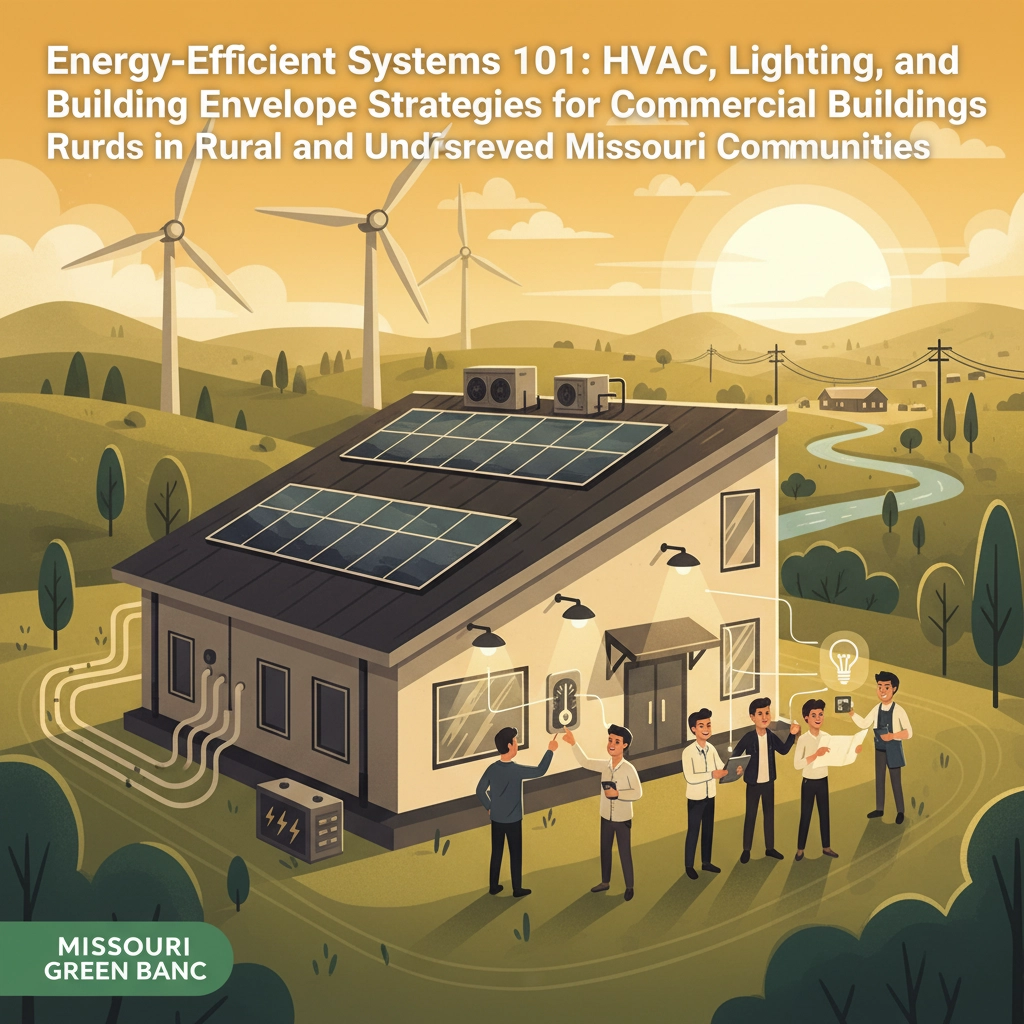
Commercial buildings in Missouri consume 23.14% of the state's total energy, with more than 44% of that energy dedicated to space heating, cooling, and ventilation. For rural and underserved communities, this represents both a significant challenge and an unprecedented opportunity. Energy-efficient upgrades to commercial buildings deliver immediate operational cost savings, improved indoor air quality, enhanced occupant comfort, and increased business vitality: benefits that strengthen the entire community's economic resilience.
Rural Missouri communities face unique energy challenges, including aging commercial building stock, limited access to technical expertise, and tighter municipal budgets. However, strategic investments in energy-efficient systems create lasting value through reduced utility costs, improved building performance, and enhanced community sustainability. The key lies in understanding which upgrades deliver the greatest impact and how local leaders can access the resources needed to implement them effectively.
HVAC Upgrades: The Foundation of Commercial Building Efficiency
HVAC systems represent the largest energy consumer in most commercial buildings, consuming approximately 7 kilowatt-hours per square foot annually. For community leaders, understanding HVAC efficiency means recognizing opportunities to help local businesses reduce operational costs while improving working conditions for employees and customers.
Modern System Controls and Automation
Building automation systems transform HVAC efficiency by implementing automated controls that optimize heating, cooling, and ventilation in real time. These systems adjust operations based on occupancy patterns, outdoor temperatures, and indoor air quality needs, eliminating energy waste during unoccupied periods. For a typical Main Street business or community center, programmable thermostats and occupancy sensors can reduce HVAC energy consumption by 15-20% with minimal upfront investment.
Smart HVAC controls also improve indoor air quality, a critical factor for employee productivity and customer comfort. Modern ventilation systems ensure adequate fresh air circulation while recovering heat from exhaust air, maintaining comfortable conditions without excessive energy consumption.

Heat Pump Technology and Equipment Upgrades
Heat pump systems offer exceptional efficiency for Missouri's climate, providing both heating and cooling from a single system. Unlike traditional heating systems that generate heat, heat pumps transfer existing heat from outdoor air or ground sources, delivering up to three times more heating or cooling per unit of electricity consumed.
For older commercial buildings common in rural communities, upgrading to high-efficiency heat pumps combined with proper insulation and air sealing can cut heating and cooling costs in half. These systems also reduce maintenance requirements compared to separate heating and cooling equipment, an important consideration for communities with limited access to specialized technicians.
Preventive Maintenance and System Optimization
Regular HVAC maintenance represents one of the most cost-effective efficiency strategies. Properly maintained systems operate 15-20% more efficiently than neglected equipment. Simple measures like replacing air filters, cleaning coils, and calibrating controls ensure systems operate at peak performance. For community leaders, encouraging local businesses to establish maintenance schedules creates immediate energy savings while supporting local service providers.
Lighting Upgrades: Immediate Impact with Rapid Payback
Commercial lighting consumes approximately 7 kilowatt-hours per square foot annually, making it the second-largest energy draw in most buildings. Lighting upgrades offer some of the fastest payback periods of any efficiency improvement, often recovering their cost within 2-4 years through reduced electricity bills.
LED Conversion and Advanced Technologies
Converting to light-emitting diode (LED) bulbs substantially reduces electricity consumption compared to traditional incandescent, fluorescent, or metal halide fixtures. LEDs consume 50-80% less electricity, last 10-25 times longer, and emit significantly less heat, reducing cooling loads during warm months.
Beyond simple bulb replacement, LED systems enable advanced lighting strategies. Tunable LED fixtures adjust color temperature throughout the day, supporting employee alertness and comfort. For retail businesses, high-quality LED lighting improves product visibility and customer experience while reducing energy costs.
Smart Controls and Occupancy Management
Installing occupancy sensors, daylight responsive controls, and multi-level switching provides additional 20-40% savings beyond LED conversion. These systems ensure lights operate only when and where needed, automatically adjusting to available daylight and occupancy patterns.
For community buildings like libraries, municipal offices, or community centers, occupancy-based lighting eliminates energy waste in unoccupied rooms while maintaining safety and security lighting where needed. Motion sensors in restrooms, storage areas, and meeting rooms prevent lights from being left on unnecessarily.

Daylighting Strategies
Maximizing natural daylight reduces artificial lighting needs while creating more pleasant indoor environments. Simple strategies include repositioning workstations near windows, installing light shelves to reflect daylight deeper into spaces, and using light-colored interior surfaces to distribute natural light effectively.
For older commercial buildings, adding skylights or solar tubes brings natural light into interior spaces that previously relied entirely on artificial lighting. Combined with daylight-responsive controls, these improvements create significant energy savings while improving occupant satisfaction.
Building Envelope Strategies: Creating an Efficient Thermal Barrier
The building envelope: walls, insulation, windows, doors, and roofing: fundamentally determines how effectively a building maintains comfortable indoor temperatures. Strengthening this envelope reduces HVAC system strain and creates more consistent, comfortable indoor conditions.
Insulation and Air Sealing
Proper insulation and air sealing form the foundation of building envelope efficiency. Missouri energy codes establish minimum insulation standards, but many older commercial buildings fall short of these requirements. Adding insulation to walls, ceilings, and floors reduces heating and cooling loads, allowing HVAC systems to operate more efficiently.
Air sealing prevents conditioned air from escaping through cracks, gaps, and openings throughout the building envelope. Professional air sealing can reduce heating and cooling energy consumption by 20-30% in older buildings. Common air leakage areas include windows, doors, electrical outlets, plumbing penetrations, and connections between different building materials.
Weather stripping around doors and windows, caulking gaps, and sealing ductwork eliminate air leaks while improving occupant comfort by reducing drafts and temperature fluctuations.
Window and Door Improvements
Windows and doors represent significant opportunities for efficiency improvements in older commercial buildings. Modern high-performance windows provide superior insulation compared to single-pane or older double-pane units. Window retrofitting processes can substantially increase existing window systems' insulation ratings through cost-effective upgrades rather than complete replacement.
Window tinting or film reduces solar heat gain during summer months while improving security and glare control. Many window tinting installations pay for themselves within three years through reduced cooling costs. For businesses with large window areas, these improvements create more comfortable conditions for employees and customers while reducing energy bills.

Roof and Wall Systems
Roof coating services offer long-term benefits by reducing energy usage during warm months while extending roof lifespan through protective coating. Reflective roof coatings reduce solar heat absorption, decreasing cooling loads and improving indoor comfort.
Wall insulation improvements, whether through exterior or interior approaches, dramatically improve building thermal performance. For older commercial buildings, blown-in insulation can fill wall cavities without major renovation, while exterior insulation systems provide comprehensive thermal barriers with minimal interior disruption.
Implementation Tips: Accessing Resources and Support
Rural and underserved Missouri communities have unprecedented access to technical assistance and funding for energy efficiency improvements through state and federal programs designed specifically to address barriers facing smaller communities.
Missouri Clean Energy District (MCED) Membership
The Missouri Clean Energy District represents the state's first and largest PACE (Property Assessed Clean Energy) program, with over 300 municipal members providing access to innovative financing for energy improvements. MCED membership enables communities to offer property owners 100% financing for efficiency upgrades with no upfront costs, repaid through property assessments over 10-20 years.
For community leaders, MCED membership provides access to technical expertise, project development support, and financing mechanisms that make efficiency improvements financially accessible for local businesses and property owners. The program specifically addresses the funding gaps that often prevent rural communities from implementing energy improvements.
Grant Programs and Low-Income Assistance
Missouri's Low-Income Weatherization Assistance Program provides grant funds to community action agencies and nonprofits serving low-income communities. This program delivers building upgrades that improve energy efficiency related to heating, cooling, and electrical systems, targeting the communities that benefit most from reduced energy costs.
Federal and state grant programs continue expanding support for rural energy efficiency, with funding available for community-wide programs, technical assistance, and demonstration projects that showcase effective strategies for similar communities.

Utility Incentives and Tax Benefits
Utility providers offer substantial incentives for commercial energy efficiency improvements. Ameren Missouri provides incentives for commercial buildings over 100,000 square feet performing technical analysis studies and implementing qualifying efficiency improvements. Spire offers rebates for gas-related efficiency upgrades, supporting comprehensive whole-building approaches.
The Energy-Efficient Commercial Buildings Tax Deduction offers federal corporate tax deductions up to $1.88 per square foot for buildings demonstrating 50% energy use reduction through improvements to heating, cooling, ventilation, and other systems. Partial deductions are available for other qualifying measures, allowing building owners to quickly recoup improvement costs through tax benefits and reduced operational expenses.
Local Partnership Development
Successful efficiency programs rely on partnerships between community leaders, local contractors, financial institutions, and technical assistance providers. Community leaders can facilitate these relationships by connecting property owners with qualified contractors, helping businesses access financing programs, and promoting the economic benefits of efficiency improvements.
Local community banks, economic development organizations, and chambers of commerce serve as essential partners in communicating efficiency opportunities and connecting businesses with appropriate resources. Missouri Green Banc works with these local partners to ensure rural and underserved communities have access to clean energy financing and technical support.
Taking Action: Next Steps for Community Leaders
Energy efficiency represents Missouri's most abundant resource for reducing costs, improving building performance, and strengthening community economic resilience. The strategies outlined: HVAC optimization, lighting modernization, and building envelope improvements: provide practical pathways for immediate impact in commercial buildings throughout rural and underserved communities.
Community leaders can begin by identifying local buildings that would benefit from efficiency improvements, connecting with MCED to explore membership benefits, and engaging local businesses in conversations about energy costs and improvement opportunities. Professional energy audits identify specific opportunities and prioritize improvements for maximum impact per dollar invested.
The combination of available financing through PACE programs, utility incentives, tax benefits, and technical assistance eliminates traditional barriers that have prevented rural communities from accessing efficiency improvements. Success begins with community leadership that recognizes energy efficiency as economic development, connecting local businesses and property owners with resources that reduce costs while improving building performance.
For communities ready to take the next step, Missouri Green Banc provides guidance on accessing these resources and developing local energy efficiency initiatives that strengthen economic vitality while advancing environmental sustainability. The path forward requires only the commitment to begin: the tools, financing, and technical support are available to ensure success.
