Communities across Missouri share a common thread: the deep care residents feel for the places they call home. This emotional connection drives the desire to see neighborhoods thrive, local businesses succeed, and neighbors prosper. Missouri Green Banc has discovered that this same love for community serves as the foundation for building stronger, more resilient places through targeted clean energy improvements.
The path to community resilience doesn't require massive overhauls or sweeping transformations. Instead, it emerges through a philosophy of continual improvement, where even small measures create meaningful change. Energy efficiency programs, solar installations, and building upgrades represent more than technical improvements: they become building blocks for community strength that benefits everyone, including the most vulnerable residents.
The Power of Incremental Progress

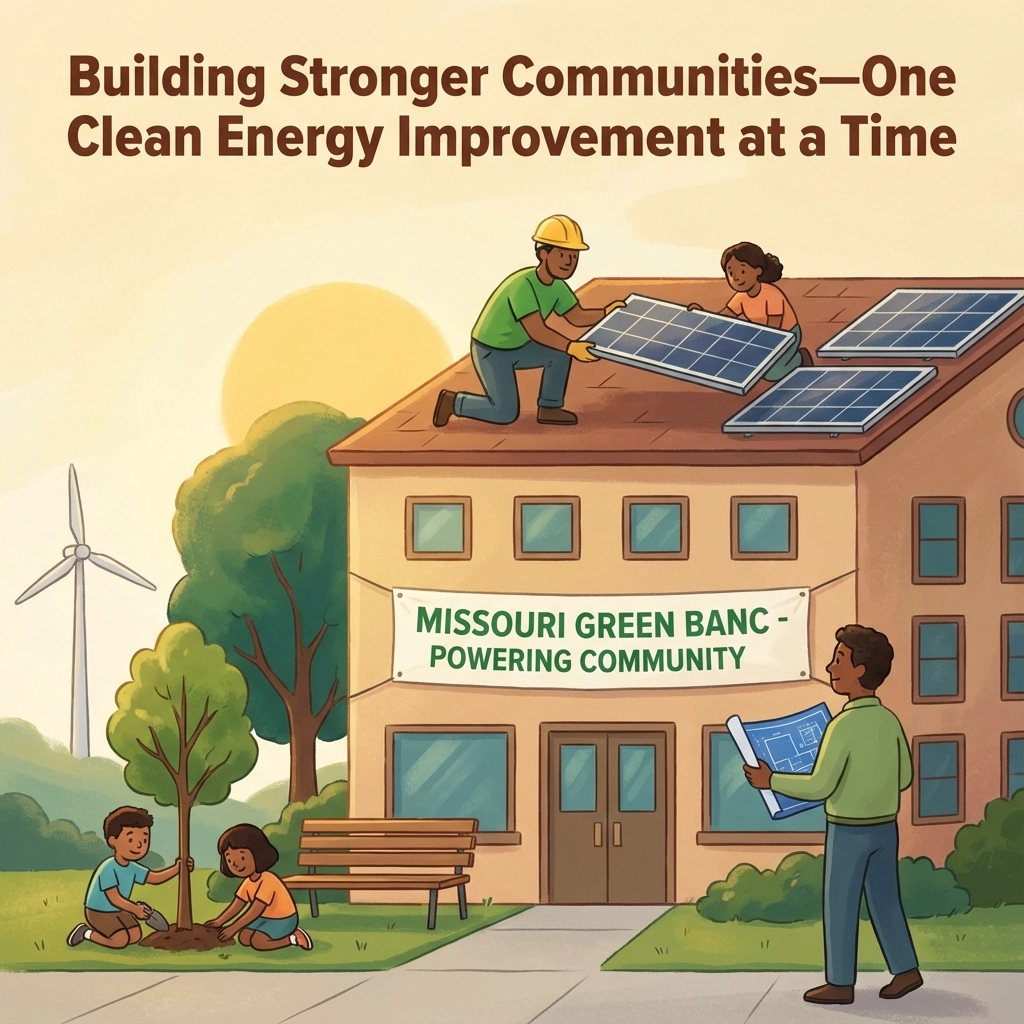
True community development happens through steady, incremental progress rather than dramatic interventions. Energy efficiency improvements exemplify this approach perfectly. Weatherization projects and access to funding for energy equipment upgrades for a low-income areas reduce utility bills, freeing up resources for other necessities. Solar panels on a community center lower operating costs while demonstrating clean energy leadership. Building retrofits create local jobs while improving indoor air quality for workers and residents.
These individual projects may seem modest in isolation, but they accumulate into significant community assets. Each improvement builds upon previous investments, creating a foundation for additional progress. A neighborhood that addresses energy waste becomes more attractive to residents and businesses. Lower operating costs for public buildings free up municipal resources for other priorities. Reduced energy burdens help families build financial stability.
The cumulative effect extends beyond immediate participants. When one property owner invests in energy efficiency, neighboring property values often increase. When local contractors gain experience with clean energy installations, the community develops expertise that attracts additional projects. When utility bills decrease across multiple households, more money circulates within the local economy.
Systems That Serve People
Every elected official and public servant carries the responsibility to ensure their community has systems in place that genuinely help cities meet the needs of their people. This responsibility extends beyond basic infrastructure to include financial mechanisms that make beneficial improvements accessible and affordable.
Traditional financing approaches often create barriers for the very improvements that strengthen communities. Upfront costs prevent participation despite long-term savings. Credit requirements often exclude qualified projects. Complex application processes discourage property owners from moving forward. These systemic barriers undermine community resilience by limiting access to beneficial improvements.
Missouri Green Banc addresses these challenges through innovative financing structures designed around community needs rather than conventional lending criteria. The PACE (Property Assessed Clean Energy) program allows property owners to finance energy improvements through their property tax assessment, eliminating upfront costs while ensuring payments remain with the property rather than the individual borrower.
This approach removes traditional barriers while creating new opportunities. Commercial property owners can pursue comprehensive building upgrades without depleting operating capital. Community and even municipal buildings can implement efficiency improvements without impacting annual budgets.
The financing structure aligns incentives between individual property owners and broader community interests. Property improvements that reduce energy consumption benefit the owner through lower operating costs while supporting regional grid stability and environmental goals. Local contractors and suppliers gain business opportunities while developing specialized expertise. Incremental improvement provides communities with additional revenue streams while supporting beneficial development.
Collaborative Success at Scale

Missouri Green Banc's approach has attracted support from an unprecedented coalition of partners, validating the effectiveness of community-centered clean energy development. Over 300 Missouri communities have joined the program, representing rural towns, suburban cities, and urban centers across the state.
This widespread participation demonstrates that community-focused energy improvement appeals across political and geographic boundaries. Rural communities appreciate the local job creation and reduced energy costs. Suburban areas value the property value improvements and environmental benefits. Urban centers recognize the potential for addressing energy burden in low-income neighborhoods while supporting broader sustainability goals.
Federal agencies have recognized the model's potential by providing technical assistance and funding support. The Department of Agriculture's rural development programs align naturally with distributed clean energy projects. The Environmental Protection Agency supports initiatives that improve air quality while building community capacity. The Department of Energy provides resources for communities developing local energy solutions.
Private foundations contribute funding that enables program expansion into underserved markets. These partnerships bridge gaps between available financing and community needs, ensuring that beneficial programs reach all residents regardless of economic circumstances. Foundation support enables technical assistance, outreach efforts, and administrative capacity that make complex programs accessible to smaller communities.
Private investors participate because the model creates stable, long-term returns while supporting measurable community benefits. The combination of municipal backing, property security, and proven track record creates investment opportunities that attract capital while serving public purposes.
Real-World Impact and Resilience

The practical benefits of community-focused clean energy development extend far beyond individual projects to create measurable improvements in community resilience. Energy efficiency upgrades reduce vulnerability to utility rate increases, providing budget predictability for households and businesses. Distributed solar installations enhance grid stability while reducing transmission losses. Building improvements create more comfortable, healthy environments while reducing maintenance requirements.
Economic development follows naturally from these improvements. Communities with modern, efficient buildings attract businesses seeking lower operating costs and environmental credentials. Local contractors develop specialized skills that create export opportunities to neighboring regions. Reduced energy costs free up household income for local spending, supporting retail businesses and service providers.
Environmental benefits compound over time as individual projects aggregate into measurable community-wide impact. Reduced energy consumption decreases emissions while improving local air quality. Efficient buildings require less heating and cooling, reducing strain on regional energy systems. Solar installations contribute to grid diversification while providing visible demonstrations of clean energy leadership.
Social benefits emerge as energy improvements address basic needs while building community capacity. Lower utility bills reduce financial stress for vulnerable households. Improved building performance creates more comfortable living and working environments. Successful project completion builds confidence in community problem-solving abilities.
The most significant benefit may be the demonstration that communities can solve their own challenges through collaborative action. Each successful project proves that residents, businesses, and local government can work together to address shared concerns while creating lasting improvements.
Building Forward Together
Missouri Green Banc's experience demonstrates that community strength emerges from the accumulated impact of many individual improvements guided by systems designed to serve local needs. The combination of innovative financing, collaborative partnerships, and community-centered implementation creates opportunities for sustained progress that benefits everyone.
The success across 300+ Missouri communities proves that this approach scales effectively while maintaining local responsiveness. Rural towns, suburban cities, and urban centers all find value in programs that align individual property improvements with broader community goals. The diversity of participating communities validates the universal appeal of approaches that combine immediate benefits with long-term resilience building.
Federal agencies, private foundations, and investors continue supporting this model because it delivers measurable results while building local capacity for sustained progress. Rather than creating dependency on external resources, successful programs build community expertise and financial capacity that enable continued improvement over time.
The path forward requires continued commitment from public servants, business leaders, and residents to prioritize systems that serve community needs while supporting individual success. Every energy efficiency upgrade, solar installation, and building improvement contributes to a stronger foundation for future progress.
Communities across Missouri have demonstrated that love for place translates into effective action when supported by appropriate systems and collaborative partnerships. The accumulated impact of individual improvements creates lasting change that strengthens communities while building capacity for addressing future challenges. This approach offers a proven pathway for communities everywhere seeking to build resilience through local action and mutual support.
