


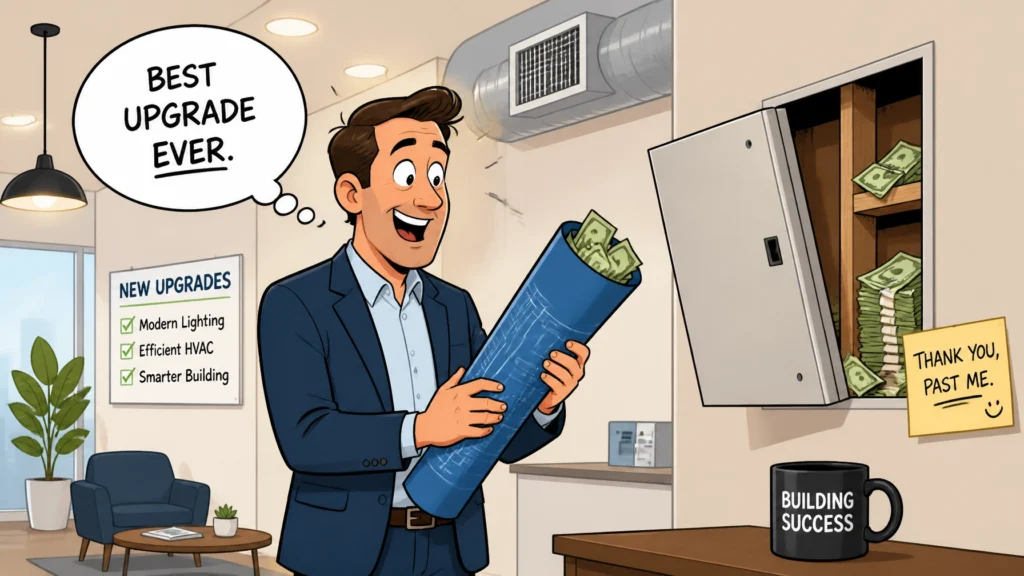
A lot of Missouri building owners already made the smart move. They replaced the failing HVAC. They upgraded the roof. They installed LED lighting, controls, insulation, or solar. The asset is better. The tenant story is better. The building is more competitive.
But there is still a quiet frustration sitting behind those improvements:
the cash is gone.
That is the tension driving a new conversation in commercial real estate. Owners improved the property, but they also drained liquidity that could have supported leasing costs, reserves, acquisitions, or the next phase of renovation. In a tighter capital market, that tradeoff feels heavier than it did a year ago.
That is where curiosity starts. What if the building upgrade was not the end of the cash story? What if some of that capital could come back onto the balance sheet without undoing the project, reopening the senior mortgage, or taking on the kind of short-term debt that creates new pressure?
At Missouri Green Banc, that question is becoming one of the most important financing questions in the state. Through CPACE financing Missouri property owners may be able to recapitalize qualifying completed improvements through the Missouri Clean Energy District, the first and largest Missouri PACE program with more than 300 municipal members.
The idea is simple, and it lands because it solves a real pain: The building pays for the upgrades. Even after the work is done.
The Real Problem: Better Buildings, Thinner Liquidity
For years, commercial owners were told to treat upgrades as a one-way use of cash. Spend the capital. Improve the building. Hope the savings eventually justify the hit.
That model is starting to crack.
Rates are higher. Liquidity is tighter. More owners are protecting optionality. And many who completed projects in the last 12 to 36 months are now looking at mechanical rooms, roofs, lighting retrofits, and envelope improvements with a different question:
Did the building just absorb cash that the business now needs back?
That is the hidden-cash problem.
The value is in the building. The performance is in the building. The improved asset is already working. But the capital used to create that value is still stuck in place.

The Curiosity Hook: Can a Past Project Still Produce Liquidity?
Yes, in many cases it can.
One of the biggest misconceptions around Property Assessed Clean Energy Missouri is that financing must happen before construction starts. In reality, qualifying projects may still be eligible after completion through retroactive or look-back structures.
Through the Missouri Clean Energy District, property owners may be able to refinance eligible energy, water, or resilience-related improvements completed within the prior 12 to 36 months. That means recent projects may not just represent sunk cost. They may represent recoverable working capital.
That is why more owners, developers, and advisors are taking a second look at projects they thought were fully closed.
Upgrades that may qualify under the Missouri PACE program
- HVAC and mechanical systems
- Roofing tied to energy performance
- LED lighting and controls
- Windows, insulation, and envelope improvements
- Solar and other renewable energy systems
- Water conservation measures
- EV charging and related site improvements
If the project improved building performance, it may fit within CPACE financing Missouri guidelines.
The Solution: A Smarter Way to Pull Capital Back Out
This is where Missouri Green Banc becomes useful in a very practical way.
Instead of treating the completed project as financially finished, Missouri Green Banc helps owners evaluate whether the work can be recapitalized through the Missouri Clean Energy District. The process is designed to fit existing workflows and work alongside property owners, developers, contractors, engineers, and other advisors.
In simple terms, the path looks like this:
- Project review – invoices, scope, and dates are reviewed.
- Eligibility analysis – qualifying measures are matched to Commercial PACE loans Missouri criteria.
- Financing structure – long-term fixed-rate repayment is sized to the project.
- Closing and repayment – funding is closed and repaid through a property assessment.
That matters because this structure is different from conventional short-term borrowing. It is tied to the property, not personal guarantees. It is designed for building improvements. And it can preserve liquidity for the next move.
For owners trying to stay competitive, that shift is bigger than it sounds. It is not just about refinancing a past expense. It is about reclaiming strategic flexibility.

Why Sophisticated Owners Pay Attention to This
There is a status dimension here, and it matters.
Strong owners do not just improve buildings. They improve how capital moves through the building. They look for ways to make efficiency upgrades, renewable energy investments, and building decarbonization Missouri strategies support both asset performance and balance-sheet strength.
Using Commercial PACE loans Missouri for completed projects signals something important to investors, partners, and tenants: this ownership group understands modern capital strategy.
That is part of why this conversation is growing. In a harder market, smarter capital stacks become a mark of leadership. Buildings that perform well are valuable. Buildings that perform well and free up liquidity are even harder to ignore.
This is also where Missouri Green Banc stands apart. Missouri Green Banc is not simply presenting another financing product. It is helping build the financial infrastructure for renewal across the state through public-private partnerships clean energy work, inclusive capital access, and the reach of the Missouri Clean Energy District across more than 300 Missouri municipalities.
That makes this larger than a transaction. It is part of a broader movement toward more resilient, more financeable, and more competitive buildings across Missouri.
Why This Matters Right Now
The timing is not theoretical.
Owners are managing higher costs, tighter refinancing conditions, and more pressure to keep assets attractive to tenants and investors. At the same time, many already completed the exact kinds of projects that can support energy efficiency financing Missouri, renewable energy funding Missouri, and green building financing Missouri strategies.
So the opportunity is not always to start something new.
Sometimes the opportunity is to go back, find the hidden cash inside work that is already done, and put that capital back to work.
That is the appeal of Missouri's best PACE program. It meets owners where they are now, not where they were before the project started.
Next Steps: Start with the Building You Already Improved
For owners, developers, and advisors, the first step is not a major commitment. It is a review.
If the property completed qualifying upgrades in the last three years, Missouri Green Banc can help determine whether those costs may fit a retroactive CPACE loan application Missouri pathway through the Missouri Clean Energy District. That includes projects tied to energy retrofit financing Missouri, PACE energy upgrades Missouri, and broader sustainable building financing Missouri goals.
The question is straightforward: how much capital is still hiding in the building?
At Missouri Green Banc, the goal is to help owners fund energy upgrades Missouri without losing financial flexibility. That is the practical promise behind Property Assessed Clean Energy Missouri and the larger mission of building renewal across the state.
Because the core truth still holds: The building pays for the upgrades.

Ready to see whether a recent project still holds hidden cash?
Explore financing insights or contact Missouri Green Banc to begin a look-back review.
