
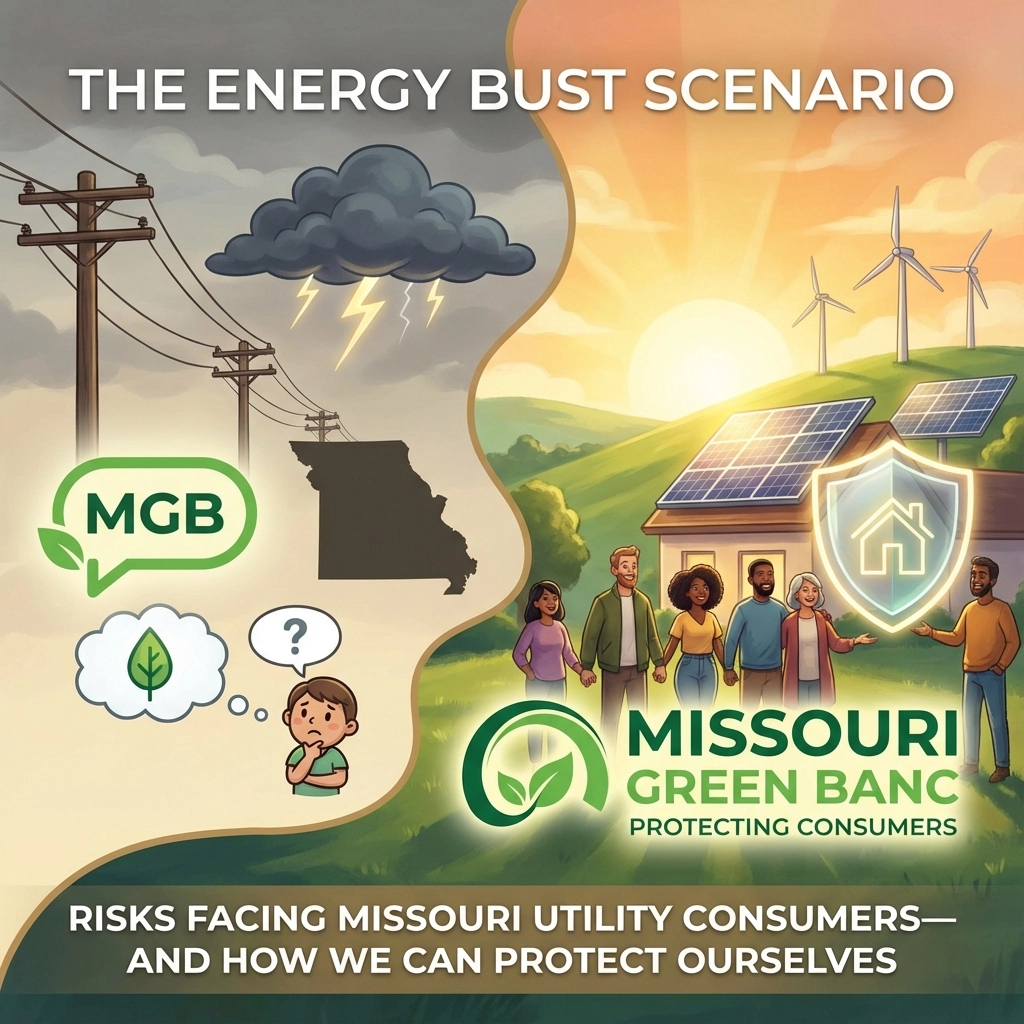
Missouri faces a preventable energy squeeze. The Midcontinent Independent System Operator (MISO) projects a 4.7 gigawatt shortfall by 2028—pressure that can raise rates, stress reliability, and push utilities toward expensive imports. The response is practical and proven: reduce facility demand, add local supply, and use inclusive financing to keep operating budgets stable and service dependable, especially across rural systems.
What This Means for Missouri Organizations
- Rate dynamics: Emergency purchases, capacity and transmission pass-throughs, and demand charges can spike operating costs. Construction-work-in-progress recovery may bring some costs before benefits; efficiency and peak management help offset impacts.
- Reliability: Tight supply raises the chance of managed outages during extreme weather. Peak shaving, flexible load, and storage reduce exposure.
- Market exposure: Volatile fuel prices magnify costs when capacity is short; diversified local generation and storage dampen swings.
- Rural considerations: Long feeders and aging assets heighten outage and price exposure for co-ops, municipal utilities, school districts, and healthcare systems. Targeted upgrades and distributed resources improve resilience.

Recent reforms, including Senate Bill 4’s “Watt for Watt” provisions, modernize infrastructure. They perform best alongside demand-side action; without it, dependence on out-of-state power grows and costs rise—undercutting competitiveness and economic development.
Indicators in the Commercial & Community Sector
- Rising operating costs driven by demand charges and fuel adjustments across campuses, industrial plants, and public facilities.
- Budget volatility for cities, counties, and school districts when wholesale prices surge.
- Project deferrals due to capital constraints, despite strong economics for efficiency and on-site generation.
Defenses That Lower Risk and Pay Back
Energy efficiency is a dependable hedge against volatility. It lowers utility spend, strengthens asset performance, and trims peak demand—persistently. High-impact measures include retro-commissioning, advanced controls, HVAC optimization and electrification where cost-effective, lighting upgrades, process efficiency, and building envelope improvements.

PACE financing accelerates upgrades without upfront capital. Through Property Assessed Clean Energy (including Commercial PACE), organizations fund improvements via property tax assessments, aligning long-term savings with long-term repayment.
- The Missouri Clean Energy District’s PACE program is the first and largest in the state, with over 300 municipal members.
- Missouri Green Banc provides inclusive financing and technical assistance focused on measurable savings and consumer protections.
- Typical projects include HVAC, boilers and heat pumps, controls and building automation, lighting, process electrification, roofing, solar, storage, and microgrids.
Local renewables strengthen resilience. Community solar, newly enabled in Missouri, allows multiple facilities, businesses, and public entities to share output from a single installation—often via subscriptions or power purchase agreements—reducing grid dependence and offering more predictable pricing. Pairing efficiency with distributed solar and storage flattens peaks and cushions market swings.
Coordinate at District and Campus Scale
District- and campus-wide upgrades and local energy planning multiply benefits:
- Lower collective load and fewer outages during extremes
- More stable operating costs for public facilities and businesses
- Dollars retained locally through reduced energy spend
Missouri Green Banc supports these efforts with financing and technical assistance through public-private partnerships with utilities, municipalities, community organizations, federal programs, private foundations, and investors.
Incentives and Support for Improvement Projects
Organizations can layer multiple support mechanisms to speed deployment:
- Utility rebates and custom incentives for HVAC, lighting, controls, process efficiency, and strategic electrification
- Demand response and curtailment payments for flexible loads and backup generation where permitted
- Federal support, including tax credits and direct-pay options for eligible tax-exempt entities, as well as competitive grants and financing from federal programs
- Energy performance contracts and power purchase agreements that reduce or shift upfront costs
Build Long-Term Energy Security
- Reduce facility demand first through retro-commissioning, controls, and targeted electrification
- Diversify local supply with community-scale renewables and storage; evaluate microgrids for critical facilities
- Use inclusive tools such as PACE to finance upgrades at speed and scale
- Plan regionally across utilities, cities, counties, school districts, and health systems to target high-impact feeders and critical loads
Missouri Green Banc, a 501(c)(3) affiliate of the Missouri Clean Energy District, expands access to inclusive financing and technical assistance for commercial, municipal, institutional, and community-scale projects. With the state’s first and largest PACE program and a network of over 300 municipal members, Missouri organizations have practical, people-first options to manage risk, control costs, and strengthen grid resilience.
