
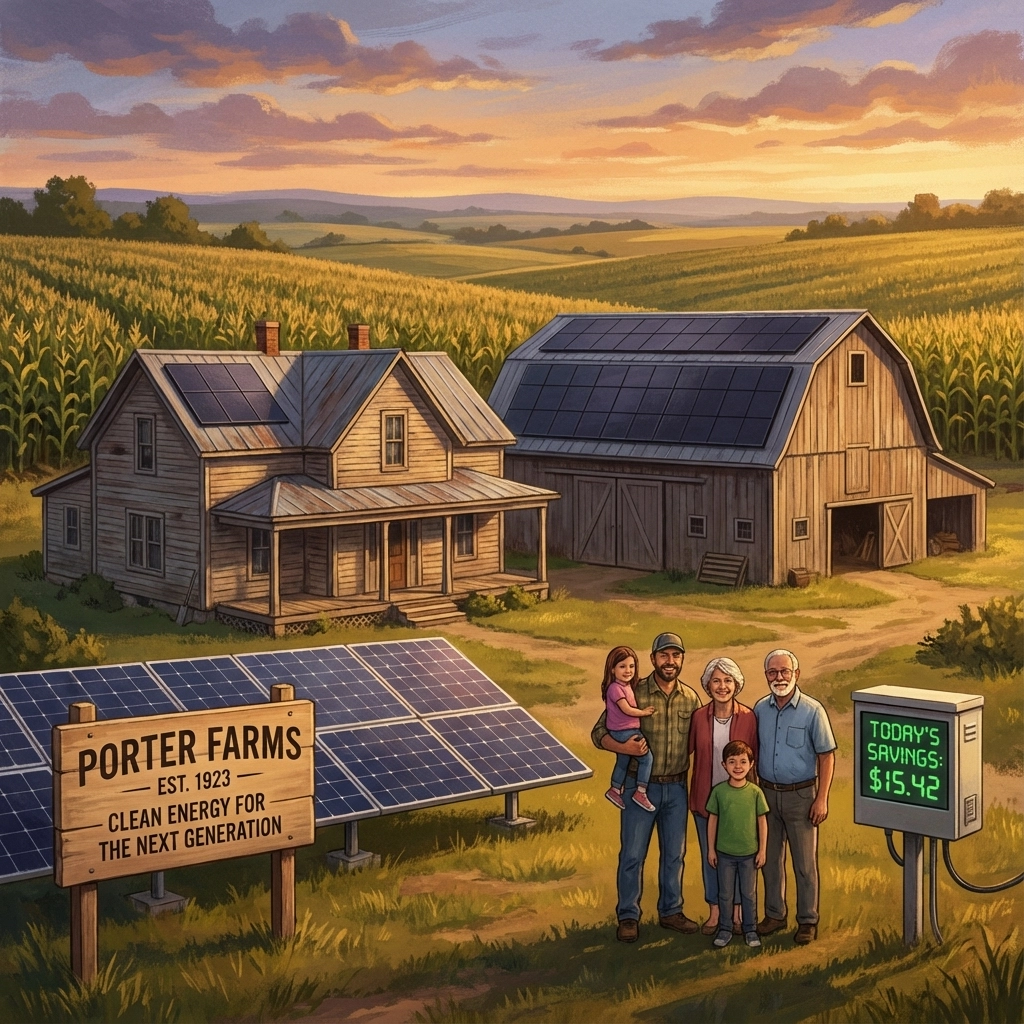
The closing of Missouri's first FASTPACE commercial solar loan to Porter Farms represents more than a successful transaction: it demonstrates a replicable model for bringing Commercial Property Assessed Clean Energy (CPACE) financing to underserved rural markets. The $400,000 C-PACE loan, which financed solar photovoltaic systems for the century-old farming operation in Mercer County, offers valuable insights for community banks, rural business owners, and clean energy developers nationwide.
Breaking Down Barriers: The FASTPACE Innovation
Missouri Green Banc and the Missouri Clean Energy District developed FASTPACE to address a critical financing gap. Many national C-PACE lenders have withdrawn from projects under $2 million, leaving small businesses without access to long-term, affordable clean energy financing. This retreat from smaller projects created an opportunity for community-focused lenders to serve their local markets: if they had the right support infrastructure.
The FASTPACE program bridges this gap by combining Missouri Green Banc's clean energy lending expertise with Allectrify's C-PACE administration capabilities, creating a turnkey solution for community banks and other local lenders. Rather than requiring local lenders to develop C-PACE expertise internally, FASTPACE provides the administrative framework, legal documentation, and technical support needed to make these transactions profitable and streamlined.

Porter Farms: A Case Study in Rural Energy Resilience
Porter Farms exemplifies the type of business that benefits most from innovative CPACE financing Missouri solutions. Operating for over 100 years, the multi-generational family farm faced rising energy costs that threatened long-term competitiveness. Traditional equipment financing would have required significant upfront capital and shorter repayment terms that could strain seasonal cash flows.
The Missouri PACE program offered a different approach. Through the C-PACE structure, Porter Farms could install solar systems with no money down, spreading costs over 20 years through voluntary property assessments. This arrangement aligned financing terms with the equipment's useful life while providing immediate energy cost reductions.
Lori Porter, the farm owner, noted that FASTPACE enabled the operation to lower energy costs while maintaining the financial flexibility essential for agricultural businesses. The solar installation reduces the farm's dependence on volatile utility rates while supporting long-term operational sustainability.
Community Bank Integration: Profitability Meets Purpose
The Porter Farms transaction reveals how community banks can profitably integrate Missouri's best PACE program into their lending portfolios. Traditional small business energy loans often require extensive underwriting for unfamiliar technologies, creating operational challenges for smaller institutions. FASTPACE eliminates these barriers by providing standardized processes and ongoing administrative support.
Community lenders participating in FASTPACE benefit from several advantages:
Simplified Underwriting: Pre-approved contractor networks and standardized project types reduce due diligence requirements while maintaining credit quality.
Enhanced Security: Property assessment mechanisms provide additional collateral security beyond traditional business lending structures.
Portfolio Diversification: Clean energy loans offer exposure to growing markets while supporting local economic development priorities.
Regulatory Alignment: PACE energy upgrade projects often qualify for Community Reinvestment Act credit, supporting compliance objectives for regulated institutions.
Missouri Green Banc's role as loan servicer further reduces operational complexity for community partners, allowing them to originate transactions without developing specialized servicing capabilities.
Scaling Rural Access: Replication Framework
The Porter Farms success provides a blueprint for expanding clean energy access across rural Missouri and beyond. Several factors contributed to the project's success that can be replicated in similar markets:
Local Partnership Development: Establishing relationships between clean energy contractors, community lenders, and municipal partners creates the foundation for sustainable deal flow.
Technical Assistance: Providing business owners with energy audits and project development support reduces barriers to participation while ensuring project viability.
Flexible Financing Terms: Offering 15-20 year repayment periods aligned with equipment lifecycles makes projects economically attractive for cash-flow sensitive businesses.
Risk Mitigation: Combining credit enhancements, contractor warranties, and ongoing performance monitoring reduces perceived risks for both lenders and borrowers.

Lender Takeaways: Building Clean Energy Lending Capacity
Financial institutions considering CPACE financing opportunities can apply several lessons from the Porter Farms experience:
Start Small: Beginning with established contractors and proven technologies reduces execution risks while building internal expertise.
Leverage Partnerships: Collaborating with experienced C-PACE administrators and green lenders provides expertise without requiring significant internal investment.
Focus on Cash Flow: Emphasizing immediate energy savings and long-term cost predictability resonates with business borrowers facing volatile operating costs.
Understand Collateral: Property assessment structures provide unique security features that differentiate C-PACE from traditional commercial lending.
Plan for Growth: Successful initial transactions create referral opportunities and demonstrate institutional capacity for larger future projects.
Borrower Insights: Maximizing PACE Program Benefits
Rural business owners evaluating energy efficiency financing options can learn from Porter Farms' approach:
Comprehensive Energy Assessment: Conducting thorough energy audits ensures projects maximize both cost savings and financing efficiency.
Long-term Planning: Selecting equipment and financing terms that align with business lifecycle planning optimizes return on investment.
Cash Flow Preservation: Using Property Assessed Clean Energy financing preserves working capital for core business operations while reducing energy costs.
Contractor Selection: Working with experienced installers familiar with C-PACE requirements streamlines project execution and documentation.
Performance Monitoring: Establishing systems to track energy production and savings validates project benefits and supports future financing decisions.
Market Implications: Beyond Single Transactions
The Porter Farms FASTPACE loan signals broader market developments with implications for multiple stakeholders. For Missouri Green Banc and the Missouri Clean Energy District, the transaction validates their strategy of partnering with community lenders to expand clean energy access. The successful execution demonstrates that rural markets represent significant untapped demand for innovative financing solutions.
Commercial energy efficiency loans through FASTPACE address market failures that have historically limited rural clean energy adoption. By reducing transaction costs and providing administrative support, the program makes previously uneconomical projects viable while creating sustainable revenue streams for participating lenders.

Looking Forward: Scaling Success
The Porter Farms transaction establishes FASTPACE as a proven model for community clean energy projects Missouri. Early indicators suggest strong demand from both borrowers and lenders, with additional transactions in the pipeline across multiple Missouri counties.
Success metrics extend beyond individual loan performance to include broader market development indicators: increased contractor participation, expanded lender partnerships, and growing awareness among potential borrowers. These leading indicators suggest FASTPACE can achieve meaningful scale while maintaining the relationship-focused approach that differentiates community banking.
For rural businesses evaluating renewable energy funding options, Porter Farms demonstrates that innovative financing can overcome traditional barriers to clean energy adoption. The combination of no-money-down structure, long-term repayment, and immediate cost savings creates compelling value propositions for cash-flow conscious operators.
Implementation Roadmap
Community lenders interested in replicating the Porter Farms model should consider a phased approach to market entry. Beginning with relationship customers who have expressed interest in energy improvements provides natural deal flow while building internal expertise. Partnering with Missouri's established C-PACE administrator reduces execution risks and accelerates time-to-market.
Rural business owners can initiate the process by conducting energy assessments to identify improvement opportunities and quantify potential savings. Understanding baseline energy costs and usage patterns provides the foundation for evaluating financing alternatives and selecting optimal project configurations.
The Porter Farms FASTPACE loan represents more than a successful financing transaction: it demonstrates a scalable model for bringing clean energy benefits to underserved markets through innovative public-private partnerships. As federal policy continues evolving, community-focused financing solutions like FASTPACE provide resilient pathways for advancing clean energy adoption while supporting local economic development.
For more information about Missouri Clean Energy District's PACE program and financing opportunities, visit Missouri Green Banc to explore available resources and partnership opportunities.
