Today marks Giving Tuesday 2025, a global movement that transforms charitable giving into meaningful community impact. For Missouri, this day presents a unique opportunity to address one of the state's most pressing infrastructure challenges: the persistent funding gap that prevents communities from accessing clean energy upgrades and building efficiency improvements.
The Clean Energy Funding Crisis in Missouri
Missouri faces a significant disparity in clean energy financing availability. While urban centers attract institutional capital for large-scale renewable projects, smaller communities and underserved areas struggle to secure funding for essential energy efficiency upgrades. This gap affects everything from rural hospitals needing HVAC modernization to community centers seeking solar installations.
Traditional financing mechanisms often fail these communities due to several structural barriers. Commercial lenders frequently lack the specialized underwriting expertise required for clean energy projects. Municipal budgets cannot absorb the upfront costs of comprehensive building upgrades. Property owners in underserved areas face higher borrowing costs that make energy efficiency investments financially unfeasible.

The consequence of this funding gap extends beyond individual buildings. Communities miss opportunities to reduce energy costs, improve indoor air quality, create local jobs, and build resilience against energy price volatility. The cumulative effect perpetuates economic disadvantages in areas that would benefit most from energy cost reductions.
Missouri Green Banc's Innovative Approach
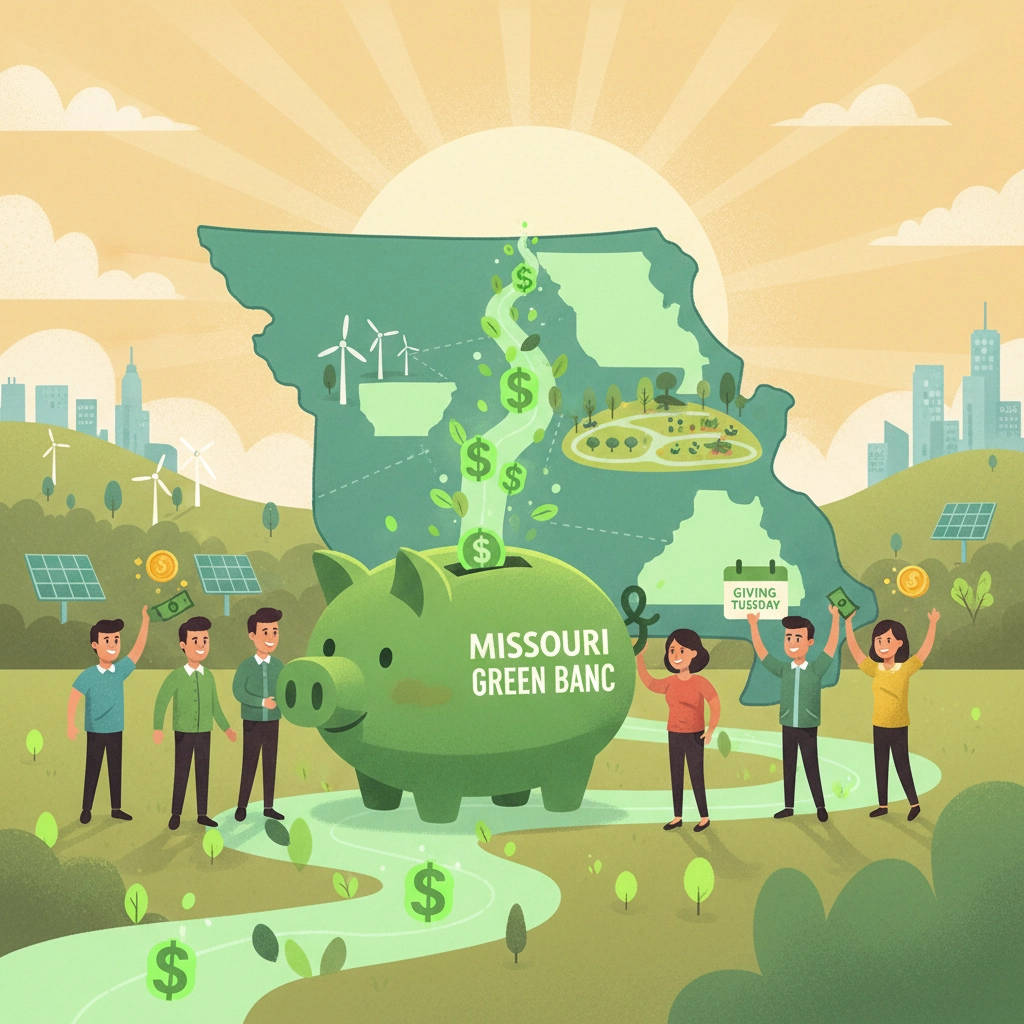
Missouri Green Banc addresses this funding crisis through a distinctive not-for-profit model that transforms charitable contributions into sustainable financing solutions. Rather than operating as a traditional grant-making organization, Missouri Green Banc cycles donations into revolving loan funds that support clean energy projects across the state.
This approach creates a multiplier effect that extends the impact of every donated dollar. When communities receive low-cost financing for energy efficiency upgrades, they generate savings that flow back into the loan fund, enabling additional projects. The model ensures that charitable contributions continue generating community benefits long after the initial investment.
The organization focuses specifically on projects that traditional financing overlooks. Community health centers receive funding for HVAC improvements that enhance patient care environments. Rural businesses access capital for building envelope upgrades that reduce operational costs and improve financial conditions. Small manufacturers obtain financing for energy efficiency measures that strengthen their competitive position.
Addressing Underserved Communities
Missouri's underserved communities face unique challenges in accessing clean energy financing. Limited credit capacity restricts borrowing options. Higher perceived risk increases borrowing costs. Lack of technical expertise complicates project development. Missouri Green Banc's approach specifically addresses these barriers.

The organization provides technical assistance that helps communities identify viable projects and navigate regulatory requirements. Risk mitigation strategies, supported by charitable contributions, enable competitive financing terms even for borrowers with limited credit history. Standardized documentation and streamlined approval processes reduce transaction costs that typically burden smaller projects.
Recent projects demonstrate this targeted approach. A community center in Southeast Missouri received financing for LED lighting and HVAC controls, reducing energy costs by 30 percent. The savings allowed the clinic to expand services while supporting local employment. Similar projects across rural Missouri have generated measurable improvements in community resilience and economic stability.
The Multiplier Effect of Strategic Giving
Donations to Missouri Green Banc operate differently from traditional charitable giving. Each contribution becomes part of a revolving fund that generates ongoing community benefits. A $10,000 donation can enable $50,000 in clean energy financing, which generates energy savings that support additional projects over time.
This multiplier effect occurs through several mechanisms. Low-cost financing reduces project barriers, enabling communities to implement upgrades they otherwise could not afford. Energy savings from completed projects create financial capacity for additional improvements. Successful projects demonstrate viability, attracting other funding sources and scaling impact.
The approach also builds local expertise and market confidence. Communities that complete clean energy projects develop technical knowledge and implementation experience. Local contractors gain specialized skills that support regional economic development. Financial institutions observe successful project outcomes, increasing their willingness to participate in future financing.
Supporting Market Development
Missouri Green Banc's work extends beyond individual project financing to address systemic market barriers. The organization develops standardized documentation that reduces transaction costs across the clean energy financing sector. Training programs build technical expertise among local contractors and project developers. Risk mitigation strategies demonstrate project viability to traditional lenders.
These market development activities create lasting infrastructure that supports ongoing clean energy investment. Standardized processes enable faster project development and lower costs. Technical expertise ensures quality installations and optimal performance. Demonstrated success attracts additional capital sources and expands financing availability.

The cumulative effect transforms Missouri's clean energy financing landscape. Communities gain access to capital that supports local economic development. Property owners implement upgrades that reduce operating costs and improve building performance. Environmental benefits accumulate through reduced energy consumption and cleaner energy sources.
Measurable Impact and Accountability
Missouri Green Banc maintains rigorous tracking of project outcomes and community benefits. Energy savings data demonstrates environmental impact and validates financial projections. Job creation statistics document economic development benefits. Community feedback assessments measure qualitative improvements in building comfort and functionality.
This accountability framework ensures that charitable contributions generate documented community benefits. Donors receive regular updates on project developments and cumulative impact metrics. Communities understand how their energy savings contribute to ongoing program sustainability. Stakeholders can verify that resources produce meaningful outcomes.
The organization publishes annual impact reports that detail project activities, financial performance, and community benefits. These reports provide transparency regarding fund utilization and demonstrate the effectiveness of the revolving loan model. Community case studies illustrate specific examples of successful projects and their local impact.
Building Sustainable Solutions
Missouri Green Banc's approach recognizes that sustainable community development requires long-term thinking and systemic solutions. Rather than providing one-time grants that address immediate needs, the organization builds financial infrastructure that supports ongoing clean energy investment.
This sustainability focus appears in several program elements. Revolving loan funds ensure that resources remain available for future projects. Technical assistance builds local capacity that reduces dependence on external expertise. Market development activities create conditions that attract additional investment sources.
The model also emphasizes community ownership and engagement. Local stakeholders participate in project planning and implementation decisions. Communities retain energy savings that support their ongoing economic development. Successful projects demonstrate local capability and build confidence for additional improvements.
Today's Opportunity
Giving Tuesday 2025 presents an immediate opportunity to strengthen Missouri's clean energy financing infrastructure and support community development across the state. Charitable contributions to Missouri Green Banc directly address the funding gap that prevents underserved communities from accessing energy efficiency and renewable energy improvements.
Every donation multiplies through the revolving loan fund model, generating ongoing community benefits that extend far beyond the initial contribution. These investments support local economic development, environmental improvement, and community resilience while building market infrastructure that attracts additional capital sources.
Missouri communities await the resources needed to implement clean energy projects that will reduce costs, improve building performance, and strengthen local economies. Today's giving decisions can provide those resources while creating sustainable financing solutions that serve Missouri communities for decades to come.
The funding gap that prevents clean energy access in underserved Missouri communities represents both a challenge and an opportunity. Missouri Green Banc's innovative approach transforms charitable giving into lasting community infrastructure, ensuring that today's generosity generates benefits that compound over time.