
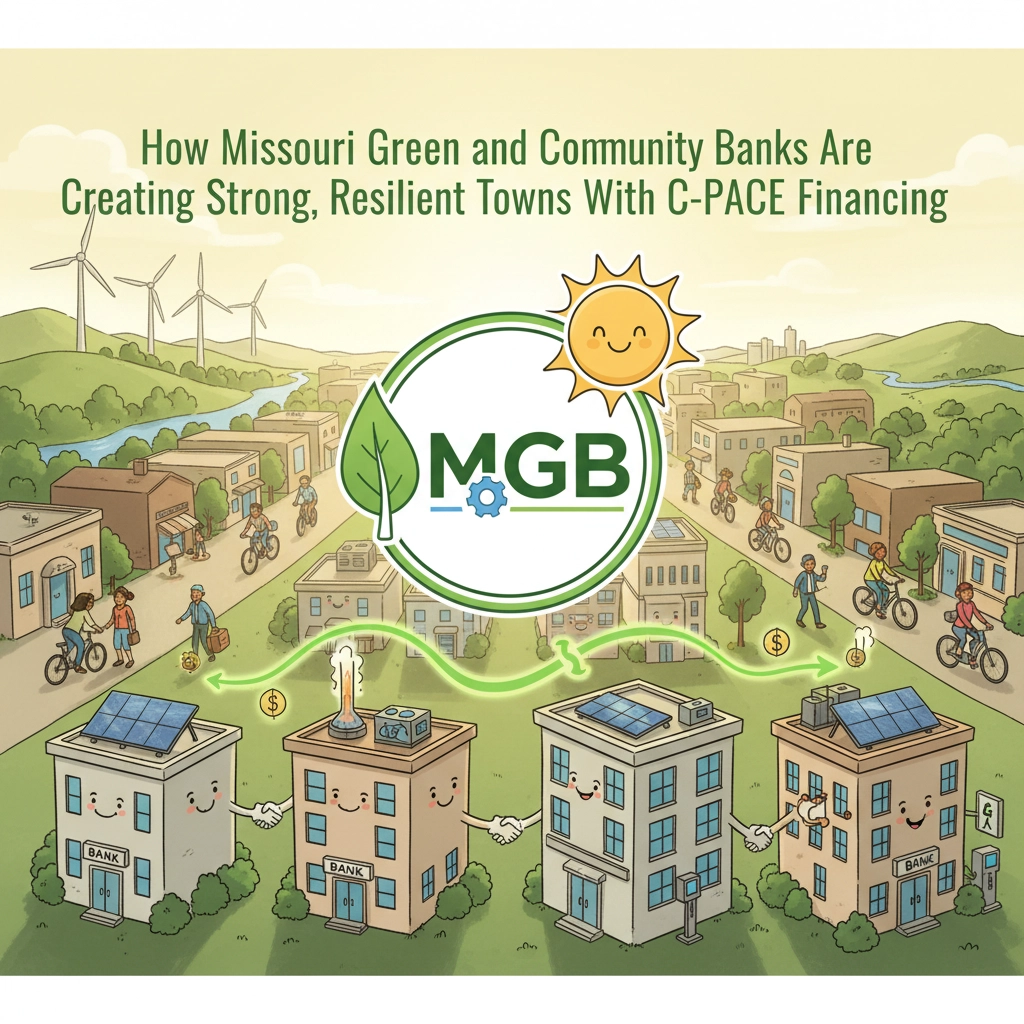
In small towns across Missouri, a quiet revolution is taking place. Community banks are partnering with Missouri Green Banc to unlock a new model of economic development: one that keeps capital local, builds incrementally, and creates lasting value for property owners and communities alike. This approach mirrors the principles outlined in Charles Marohn's "Strong Towns" movement, which advocates for bottom-up, financially resilient community development over top-down megaprojects.
The catalyst for this transformation is Commercial Property Assessed Clean Energy (C-PACE) financing, a tool that enables property owners to fund energy efficiency and renewable energy improvements through long-term, property-tied assessments. When combined with the local knowledge and community connections of local banks, C-PACE becomes more than just financing: it becomes a pathway to stronger, more economically resilient towns.
The Strong Towns Foundation: Building From the Ground Up
Charles Marohn's "Strong Towns" philosophy challenges conventional economic development wisdom. Rather than pursuing large-scale projects that require massive upfront investment and uncertain returns, Strong Towns advocates for incremental improvements that generate steady, predictable value over time. This approach prioritizes local ownership, modest-scale interventions, and development patterns that can sustain themselves financially across multiple generations.
The parallels between Strong Towns thinking and effective C-PACE implementation are striking. Both focus on:
- Incremental investment rather than transformational megaprojects
- Local ownership and community-controlled development
- Long-term value creation that compounds over time
- Financial sustainability that doesn't burden future generations
- Bottom-up solutions driven by local needs and priorities
For Missouri communities, this philosophy translates into supporting the hardware store owner who wants to upgrade aging HVAC systems, the family farm installing solar panels, or the downtown restaurant improving energy efficiency. These individual improvements, multiplied across hundreds of properties, create the foundation for sustained economic growth.

Why Community Banks Are Essential Partners
Community banks understand their local markets in ways that national lenders cannot match. They know which businesses are thriving, which property owners are reliable, and what types of improvements make sense for their trade area. However, these banks face significant regulatory and operational challenges when it comes to long-term, fixed-rate lending for building improvements.
Federal banking regulations require community banks to carefully manage interest rate risk and maintain balanced loan portfolios. Traditional energy efficiency loans often require terms of 15-20 years to make the payments affordable for borrowers, but these long-term, fixed-rate commitments can create regulatory compliance issues for smaller banks. Additionally, many energy efficiency projects involve newer technologies that don't fit neatly into established lending categories, creating additional underwriting complexity.
These regulatory realities have historically limited community banks' ability to serve property owners seeking to improve their buildings' energy performance, despite strong local demand for such financing. The result has been a gap in the market: property owners who want to make improvements but lack access to appropriate capital, and community banks that want to serve their customers but face structural barriers to doing so.
Missouri Green Banc's Innovative Solution
Missouri Green Banc has developed a collaborative approach that addresses these challenges while preserving the community bank's essential role as local advisor and relationship manager. Rather than competing with community banks, Missouri Green Banc partners with them to provide the specialized expertise and risk management tools needed for successful C-PACE lending.
The Missouri Clean Energy District's PACE program, the first and largest in Missouri with over 300 municipal members, provides the regulatory framework that makes this collaboration possible. Property owners can finance eligible improvements through voluntary property tax assessments that transfer with the property, eliminating the long-term balance sheet exposure that concerns community bank regulators.
Missouri Green Banc works with community banks to:
- Provide technical expertise on energy efficiency and renewable energy projects
- Handle specialized underwriting for technologies and project types outside traditional banking experience
- Manage long-term servicing of C-PACE assessments
- Offer ongoing support throughout the project lifecycle
This partnership model allows community banks to continue serving their customers while avoiding the regulatory and operational challenges that previously made energy efficiency lending difficult. The bank maintains the customer relationship and provides traditional banking services, while Missouri Green Banc handles the specialized aspects of clean energy financing.

Real-World Impact: Building Community Wealth
The effectiveness of this collaborative approach becomes evident in communities across Missouri. In rural Mercer County, Porter Farms: a century-old family operation: recently completed a $400,000 solar installation through C-PACE financing. This project allows the farm to reduce operating costs while maintaining the cash flow needed for ongoing operations and growth.
For Porter Farms, traditional bank financing would have required significant upfront capital and shorter repayment terms that could strain cash flow during challenging agricultural cycles. C-PACE financing, structured through Missouri Green Banc's partnership with local lenders, provided a 20-year term that aligns with the solar system's productive life while keeping the financing local and supporting the regional economy.
Similar projects are occurring in communities throughout Missouri: grocery stores upgrading refrigeration systems with efficient equipment, office buildings installing modern HVAC systems, and retail establishments improving lighting and insulation. Each project represents not just building improvements, but local wealth creation that supports the broader community economy.
The Multiplier Effect: How Local Investment Builds Strong Towns
When property owners invest in efficiency and renewable energy improvements, the economic benefits extend far beyond reduced utility bills. These projects typically involve local contractors, suppliers, and service providers, creating a multiplier effect that strengthens the entire community economy.
Consider a typical $250,000 commercial building efficiency upgrade in a Missouri town of 15,000 residents. The initial investment flows to local electricians, HVAC contractors, and material suppliers. The property owner's reduced energy costs create ongoing savings that remain in the local economy rather than flowing to distant utility companies. The improved building becomes more valuable and attractive to tenants, supporting higher rents and property values throughout the community.

Missouri Green Banc's partnership with community banks ensures these benefits remain local. Rather than extracting value through distant ownership structures, the financing keeps community banks involved as ongoing partners in their customers' success. This approach builds the kind of incremental, sustainable wealth that Strong Towns principles advocate.
Scaling Success Through Partnership
The Missouri Clean Energy District's statewide reach, combined with Missouri Green Banc's technical expertise and community banking relationships, creates a scalable model for economic development. Rather than depending on large-scale industrial recruitment or transformation projects, communities can build wealth through the accumulation of individual property improvements.
This approach proves particularly effective in smaller communities that lack the infrastructure or market size to attract major industrial development. A rural town with strong community banks and motivated property owners can leverage C-PACE financing to steadily improve its building stock, reduce operating costs for local businesses, and create conditions for sustainable growth.
The partnership model also addresses workforce development challenges that many communities face. Energy efficiency and renewable energy projects create opportunities for local contractors and tradespeople to develop specialized skills while working on familiar building types in their own communities.
Moving Forward: Building on Proven Success
Missouri Green Banc's collaborative approach with community banks demonstrates how innovative financing can support Strong Towns principles without displacing existing community institutions. By addressing regulatory challenges and providing specialized expertise, this partnership enables incremental improvements that build lasting community wealth.
For community bankers, the model offers a path to serve customers' energy efficiency needs while maintaining regulatory compliance and preserving important customer relationships. For property owners, C-PACE provides access to long-term, affordable capital for improvements that reduce operating costs and increase property values. For communities, the combination creates a foundation for sustained economic development that builds on local strengths rather than depending on external forces.
The success of this approach suggests broader applications beyond energy efficiency financing. When community institutions work together to address market gaps and regulatory challenges, they can create solutions that strengthen local economies while serving individual customer needs.
As Missouri communities continue to face economic challenges and opportunities, the partnership between Missouri Green Banc and community banks offers a proven pathway to building stronger, more resilient towns through incremental investment and local collaboration. This approach honors both the practical wisdom of community banking and the transformative potential of clean energy financing, creating a model that other states and regions can adapt to their own circumstances.
The future of community economic development may well depend on similar partnerships that combine local knowledge with specialized expertise, regulatory compliance with innovative financing, and individual property improvements with broader community goals. In Missouri, that future is already taking shape, one building improvement at a time.