
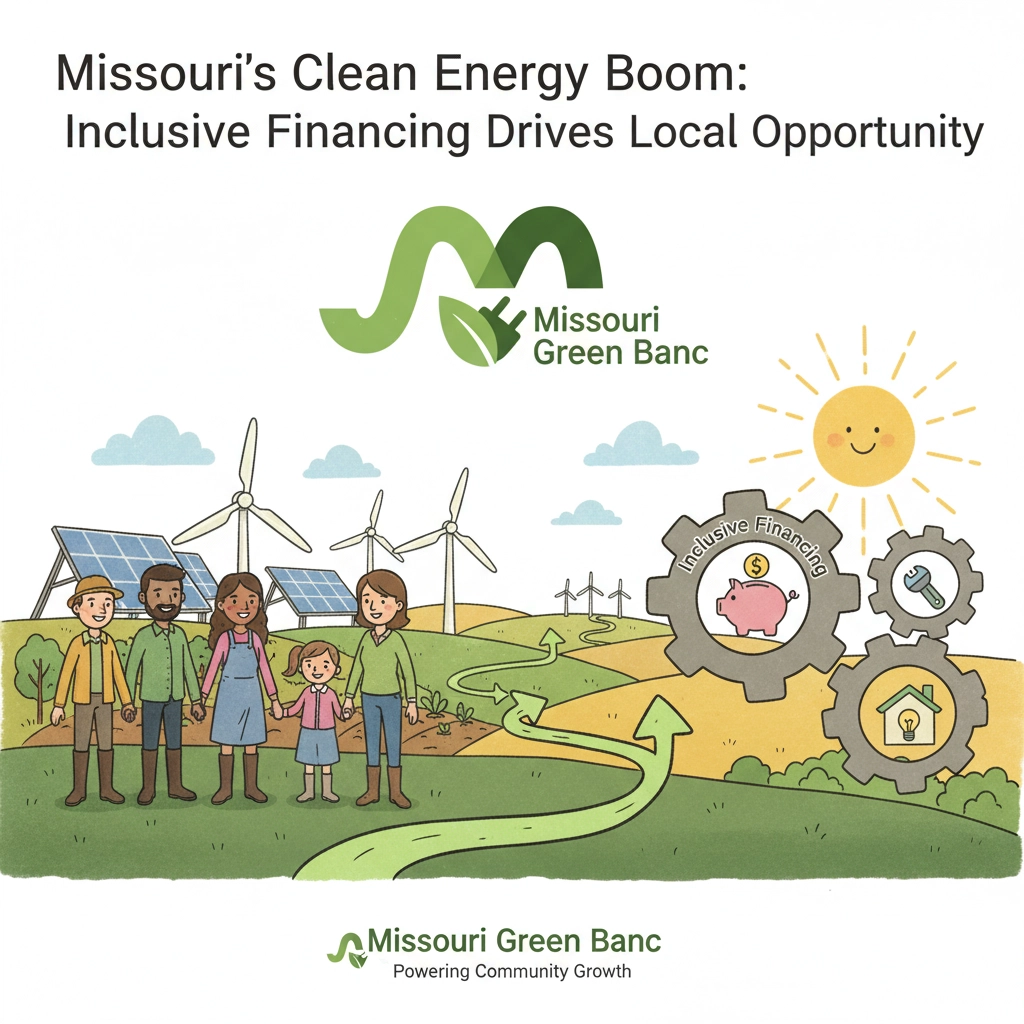
Missouri's clean energy sector is experiencing unprecedented growth, with job creation outpacing the state's overall economic expansion by a factor of three. This surge represents more than statistical achievement: it reflects a fundamental shift toward sustainable economic development that creates opportunities across diverse communities throughout the Show-Me State.
The momentum stems from strategic investments in inclusive financing mechanisms that break down traditional barriers to clean energy access. Missouri Green Banc, operating as a key catalyst in this transformation, demonstrates how targeted financial solutions can unlock potential in rural communities, small towns, and underserved urban areas where clean energy opportunities were previously limited by capital constraints.
Economic Impact Beyond Numbers
The clean energy job surge encompasses multiple sectors, from solar installation technicians and energy auditors to project managers and electrical contractors. These positions offer competitive wages and career advancement paths that keep talent within Missouri communities rather than requiring relocation to major metropolitan areas.
Rural communities particularly benefit from this employment diversification. Agricultural regions can now support clean energy technicians alongside traditional farming operations, creating economic stability through multiple revenue streams. Small manufacturing towns gain opportunities to retool existing facilities for clean energy component production, leveraging established industrial infrastructure and skilled workforces.

Urban areas with historically limited economic opportunities see new pathways emerge through weatherization programs, solar installation projects, and energy efficiency retrofits. These initiatives require local labor while generating long-term cost savings for residents and businesses, creating a multiplier effect throughout neighborhood economies.
Inclusive Financing: Breaking Down Barriers
Missouri Green Banc's approach to inclusive financing addresses systemic challenges that historically prevented many communities from accessing clean energy benefits. Traditional lending often excludes projects in rural areas or lower-income neighborhoods due to perceived risk factors or insufficient collateral requirements.
The organization's financing solutions include flexible loan terms, credit enhancement mechanisms, and partnerships with community development financial institutions that understand local economic conditions. This approach recognizes that clean energy investments generate measurable returns through reduced utility costs and increased property values, creating sustainable pathways for repayment even in communities with limited traditional creditworthiness.
Property Assessed Clean Energy (PACE) financing exemplifies this inclusive approach. Missouri's PACE program, managed through the Missouri Clean Energy District with over 300 municipal members, generated nearly $92 million in financing during the past few years alone. This mechanism allows property owners to fund clean energy improvements through assessments on their property tax bills, spreading costs over extended periods while capturing immediate energy savings.
The PACE model particularly benefits small businesses and municipalities that lack access to traditional commercial lending for energy projects. A rural business can upgrade its HVAC system and install solar panels without depleting capital reserves, while a small manufacturer can improve facility efficiency without compromising operational cash flow.
Skilled Trades and Workforce Development
Clean energy expansion creates demand for both traditional construction skills and specialized technical knowledge. Electricians adapt their expertise to solar panel installations and battery storage systems. HVAC technicians expand into geothermal systems and high-efficiency heating equipment. General contractors incorporate energy efficiency considerations into renovation and new construction projects.

This skills evolution occurs through partnerships between Missouri Green Banc, educational institutions, and industry associations. Community colleges develop certification programs that prepare workers for clean energy careers while employers gain access to qualified candidates with locally relevant training.
Apprenticeship programs combine classroom instruction with hands-on experience, ensuring workers develop practical skills while earning wages. These programs often include entrepreneurship components, preparing participants to establish their own clean energy service businesses within their home communities.
The workforce development emphasis on local talent retention addresses a critical challenge facing many Missouri communities: the outmigration of young adults seeking career opportunities. Clean energy jobs provide compelling reasons to remain in or return to hometowns, strengthening community social fabric alongside economic foundations.
Regional Economic Multipliers
Clean energy investments generate economic benefits extending far beyond immediate job creation. Local energy production reduces outflows of capital to distant utility companies, keeping more dollars circulating within regional economies. Property owners who reduce energy costs through efficiency improvements have additional disposable income for local spending.
Clean energy businesses often source materials and services locally when possible, creating demand for trucking, warehousing, administrative, and professional services. A solar installation company requires accounting support, legal assistance, insurance services, and marketing capabilities, all of which can be provided by regional businesses.

Municipal clean energy projects demonstrate particularly strong economic multipliers. When a city reduces its energy costs through efficiency improvements or renewable generation, taxpayers benefit through lower utility bills or enhanced municipal services funded by energy savings. These projects also showcase clean energy benefits to residents and businesses, encouraging broader adoption throughout the community.
Infrastructure Investment and Grid Modernization
Missouri's clean energy job growth occurs within a broader context of infrastructure modernization that creates additional employment opportunities. The Northern Missouri Grid Transformation Program, approved in 2025, represents a $3.3 billion investment in grid resilience and clean energy integration over the next two decades.
This infrastructure development requires specialized skills in smart grid technology, energy storage systems, and advanced metering infrastructure. Workers gain experience with cutting-edge technologies while supporting projects that benefit entire regions through improved reliability and reduced energy costs.
Grid modernization also enables distributed energy resources like rooftop solar and battery storage to operate more effectively, creating opportunities for local energy entrepreneurs and service providers. Communities can develop microgrids that enhance resilience during extreme weather events while providing economic benefits through energy independence.
Community-Centered Development
The inclusive financing approach prioritizes community input and local leadership in clean energy project development. Rather than imposing external solutions, Missouri Green Banc works with community leaders to identify priorities and develop financing structures that align with local economic conditions and cultural values.

This community-centered approach builds social capital alongside financial capital. Residents who participate in clean energy projects gain knowledge and experience that enables them to advocate for additional improvements and support neighbors considering similar investments. Community ownership of clean energy benefits creates stakeholders who actively promote continued expansion.
Rural communities often leverage clean energy projects to address multiple challenges simultaneously. A cooperative solar installation can provide affordable electricity while generating revenue for community development initiatives. Energy efficiency upgrades in affordable housing reduce utility burdens for low-income residents while improving health and comfort conditions.
Looking Forward
Missouri's clean energy job surge represents the early stages of a long-term economic transformation. As financing mechanisms mature and workforce development programs expand, the state is positioned to capture additional opportunities in manufacturing, research and development, and advanced energy services.
The inclusive financing model pioneered by Missouri Green Banc provides a framework that other states are beginning to examine and adapt. By demonstrating that clean energy investments can generate broad economic benefits while serving diverse communities, Missouri establishes itself as a leader in equitable energy transition strategies.
The path forward requires continued collaboration between financial institutions, educational providers, community organizations, and government agencies. Success depends on maintaining focus on local ownership and community benefit while scaling programs to serve growing demand across the state.
Clean energy's promise extends beyond environmental benefits to encompass economic opportunity, community empowerment, and regional resilience. Missouri's experience demonstrates that inclusive financing can transform this promise into measurable results for communities throughout the state.
For communities ready to explore clean energy opportunities, Missouri Green Banc offers expertise, financing solutions, and partnership approaches designed to maximize local benefits while achieving environmental and economic goals. The clean energy boom continues, and every Missouri community has potential to participate in and benefit from this transformative economic development.