For municipal attorneys, city and county clerks, and elected officials, the responsibility of governance often feels like a constant exercise in risk management. Every new initiative, regardless of its merit, must be scrutinized for its impact on the general fund, its legal durability, and its long-term administrative burden. In the current landscape of sustainable development and energy policy, the challenge is amplified by a deluge of competing interests and complex financial models.
Information is abundant; certainty is scarce.
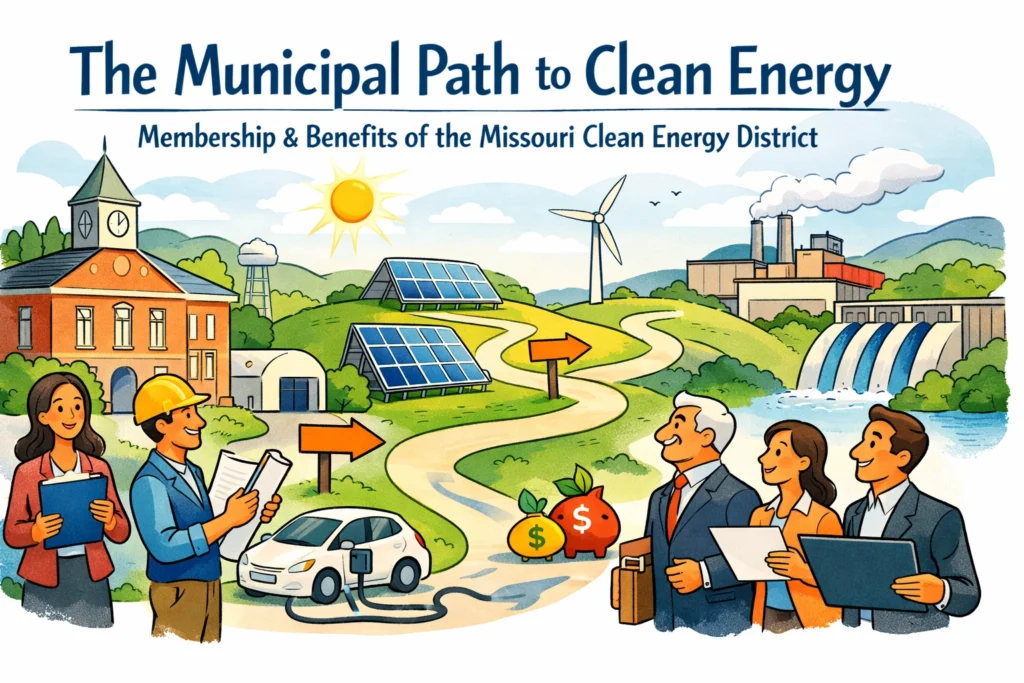
In this environment, the Missouri Clean Energy District (MCED) stands as a pillar of structural clarity. As the state’s first and largest Property Assessed Clean Energy (PACE) district, MCED provides a statutory framework that allows local governments to facilitate economic growth and energy resilience without compromising their fiduciary duties. This post outlines the membership benefits and the streamlined process for joining a network that already includes over 300 Missouri cities and counties.
The Statutory Foundation of the Missouri Clean Energy District
The Missouri Clean Energy District is not a private entity or a loosely formed coalition; it is a statewide political subdivision. Established under the authority of Missouri’s PACE Act, MCED was created to serve as a reliable, transparent vehicle for financing clean energy improvements.
For a municipal attorney, the distinction of "political subdivision" is critical. It signifies that the district operates under a specific legal mandate, providing a level of statutory protection and public accountability that private vendors cannot match. By joining the district, a municipality is not entering into a standard vendor contract but is instead exercising its legislative authority to provide a voluntary public benefit to its citizens.

A Zero-Risk, Zero-Cost Framework
One of the most persistent hurdles for local government initiatives is the impact on the municipal budget. The MCED model was specifically engineered to eliminate this barrier. Membership in the Missouri Clean Energy District is provided at no cost to the municipality.
The financial structure is designed to be entirely self-sustaining:
- No Impact on General Funds: Membership does not require an appropriation of taxpayer dollars.
- No Administrative Burden: The ongoing administration of the program: including project underwriting, funding, and tracking: is handled by the district and its partners at Missouri Green Banc.
- No Municipal Liability: Because PACE financing is a voluntary special assessment tied to the property, the municipality bears no responsibility for the repayment of the debt. The obligation remains with the property owner and is secured by a lien on the property itself.
By removing the financial and administrative friction usually associated with new public programs, MCED offers what many local officials call the "Easy Button" for energy policy.

Driving Local Economic Development through Property Assessed Clean Energy Missouri
The primary benefit of membership is the activation of Property Assessed Clean Energy (PACE) financing within the local jurisdiction. In a marketplace where "Information is abundant; certainty is scarce," PACE provides a reliable financial tool for property owners to invest in their assets.
CPACE financing in Missouri allows commercial, industrial, and multi-family property owners to access 100% of the capital needed for energy-efficient upgrades, renewable energy installations, and water conservation measures. The benefits for the community are multi-fold:
- Preservation of Capital: Business owners can preserve their cash for operations while financing long-term building improvements over terms of up to 20 years.
- Job Creation: These projects are inherently local. HVAC contractors, roofers, and solar installers within the community see increased demand, keeping capital circulating locally.
- Increased Property Values: Modernized buildings with lower operating costs are more valuable assets, contributing to a more robust local tax base over time.
For elected officials, the Missouri PACE program is a powerful tool for economic development that requires no new taxes and creates no public debt. It allows the private sector to lead the way in building a more resilient local economy.
The Missouri Green Community Program: Grants for Public Facilities
While the benefits to private property owners are significant, MCED membership also unlocks direct advantages for the municipality itself. Through the Missouri Green Community Program, member communities become eligible for grants and specialized funding for local government energy projects.
Many Missouri municipalities are faced with "old bones": historic city halls, aging community centers, and outdated water treatment facilities. The cost of upgrading these facilities to modern energy standards is often prohibitive. As a member of MCED, the municipality gains access to a support system designed to help identify and fund these public improvements. This partnership ensures that local governments can lead by example, reducing their own energy consumption and operational costs through the same mechanisms they provide to their constituents.

The Path to Membership: A Simple Two-Step Process
Joining the Missouri Clean Energy District is designed to be a straightforward legislative action. The goal is to minimize the time required by city and county staff while ensuring all legal requirements are met.
1. Request the Specimen Ordinance
The Missouri Clean Energy District provides a specimen ordinance or resolution at no cost. This document has been vetted by legal experts and is currently in use by over 300 member jurisdictions. It is designed to be easily integrated into the municipality’s existing legislative framework.
2. Formal Adoption
The local governing body (City Council, Board of Aldermen, or County Commission) reviews and adopts the ordinance. This act officially incorporates the jurisdiction into the district. Once the ordinance is passed and a copy is provided to MCED, the program is live. Property owners in the community can immediately begin applying for Commercial PACE loans in Missouri.

Why Missouri Green Banc is the Reliable Partner
In the world of finance and public policy, the "Marketplace of Stories" can often obscure the facts. There are many voices in the energy space, but Missouri Green Banc, acting as the affiliat of the Missouri Clean Energy District, prioritizes structural reality over narrative.
Our mission as a non-profit organization is to anchor capital locally. We understand that for a program to be truly effective in Missouri, it must respect the principles of local control and fiscal conservatism. By providing Missouri's best PACE program, we ensure that the focus remains on the outcome: stronger buildings, lower energy bills, and thriving communities.
The strength of the district lies in its scale. With more than 300 members, we have created a standardized, predictable environment for investors and property owners alike. This stability is what creates the certainty that municipal leaders need when making long-term decisions.

Conclusion: Certainty in Governance
The transition to a more energy-efficient future does not have to be a leap into the unknown. For Missouri’s municipal leaders, the Missouri Clean Energy District offers a path that is legally sound, financially responsible, and administratively simple.
By joining the district, your community joins a statewide movement that prioritizes building decarbonization and economic resilience without adding to the public debt. In an era where "Information is abundant; certainty is scarce," MCED provides the factual, statutory signal that helps Missouri cities and counties move forward with confidence.
For more information on the membership process or to request a specimen ordinance for your jurisdiction, visit our membership page or explore our latest news to see how other Missouri communities are putting PACE to work.
About Missouri Green Banc
Missouri Green Banc is a non-profit organization dedicated to providing inclusive, community-based clean energy solutions. By serving as a partner to the Missouri Clean Energy District, we help unify communities and partners statewide to foster a more sustainable and prosperous Missouri.
