
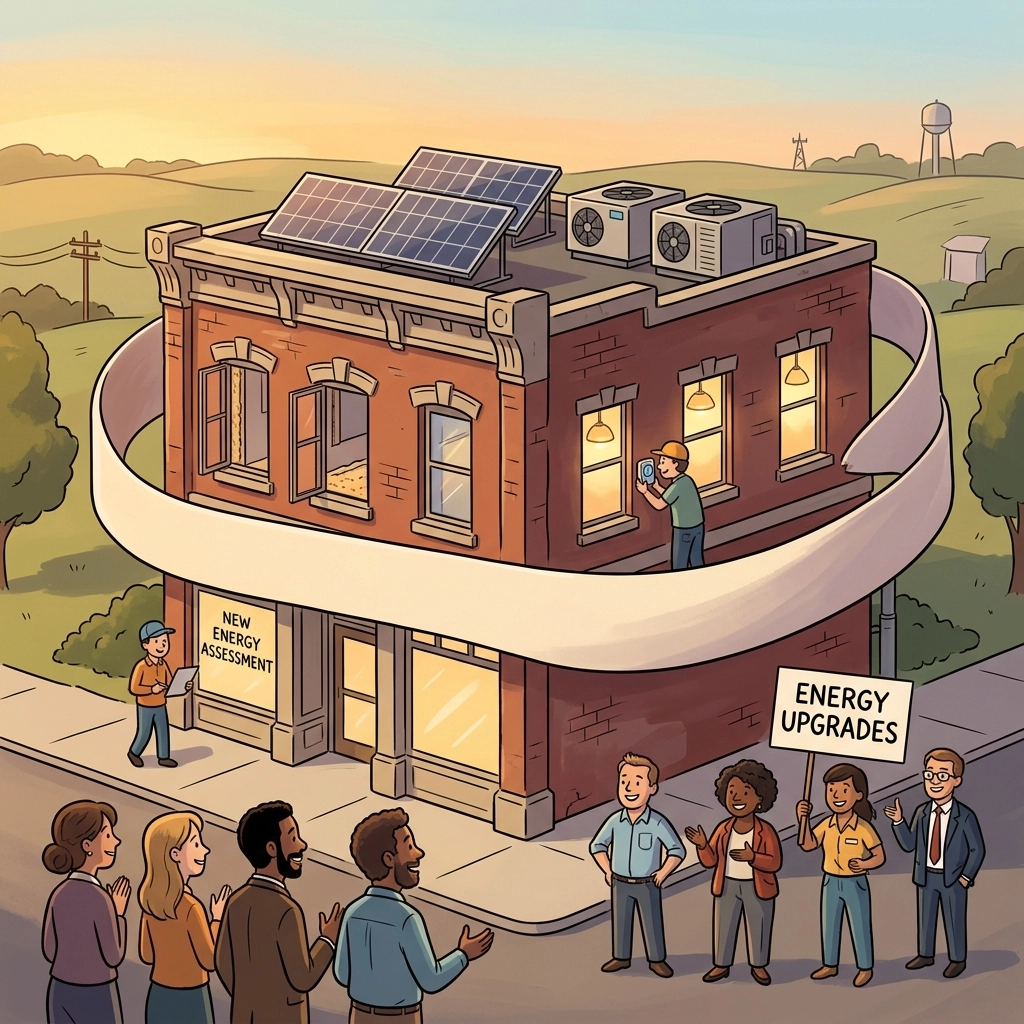
Missouri is a state built on resilience. From the storefronts along Main Street to the light industrial warehouses flanking the I-70 corridor, small commercial buildings are the undisputed backbone of the Show-Me State's economy. These structures: typically under 50,000 square feet: house the offices, retail shops, and adaptive reuse projects that keep Missouri communities thriving. However, beneath the brick-and-mortar exterior of many of these buildings lies a silent drain on profitability.
According to the U.S. Department of Energy (DOE), roughly 30% of the energy used in commercial buildings is wasted. For a small business owner, that is not just a statistic; it is a direct leak in the balance sheet. In Missouri’s mixed climate, where buildings must endure both bone-chilling winters and humid, heavy summers, the stakes for energy efficiency are particularly high.
Modern building science has reached a consensus: maximizing ROI isn't about throwing money at the newest "green" gadget. It is about a disciplined, gritty approach to building performance. By utilizing tools like the Missouri PACE program, property owners can transform these liabilities into strategic assets.
The Top 10 Energy Efficiency Improvements for Missouri Commercial Property
When energy engineers and rehab contractors look at Missouri’s pre-2000 building stock, they prioritize measures that offer the fastest payback and the most significant structural impact. Here are the top 10 improvements that define high-performance Missouri buildings.
1. HVAC System Upgrades (The Heavy Hitter)
HVAC is typically the largest energy consumer in any commercial building, often accounting for 40% or more of total utility costs. Replacing legacy Rooftop Units (RTUs) or aging boilers with high-efficiency systems is the single most impactful move a property owner can make.
The industry is shifting toward variable-speed systems, such as Variable Refrigerant Flow (VRF) and cold-climate air-source heat pumps. These systems do not just turn "on" or "off"; they modulate their output to match the building's exact needs, reducing energy use by 25–50%. In Missouri, the shift toward electrification via heat pumps is now a viable and cost-effective strategy even in peak winter.

2. Lighting Retrofits (LED + Controls)
Lighting is often described as the "low-hanging fruit," but with modern controls, it is more like a cash-flow engine. A full LED conversion: both interior and exterior: reduces lighting energy use by 50–80%. When paired with occupancy sensors and daylight harvesting (sensors that dim lights when natural sun is present), the payback period often drops to between one and three years. This is frequently the first project funded through CPACE financing due to its immediate impact on net operating income (NOI).
3. Building Envelope Enhancements
For small buildings, the "shell" is the first line of defense. Upgrading roof insulation during a planned replacement offers one of the highest ROIs in the industry. Wall insulation and high-performance glazing (windows) further reduce the structural load on the HVAC system. By keeping the heat out in July and the warmth in during January, the building requires less mechanical intervention to stay comfortable.
4. Air Sealing (The Undervalued Hero)
If a building is a bucket, air leaks are the holes in the bottom. Air sealing is often skipped because it isn’t "flashy," yet it is one of the most cost-effective gains per square foot. Sealing roof-wall joints, window penetrations, and duct leakages can reduce heating and cooling losses by 10–20% immediately. Professional contractors highlight this as a "grit" measure: it requires attention to detail rather than expensive machinery.

Image Description: A close-up of a contractor applying professional-grade spray foam or sealant to a building's envelope gap, demonstrating the precision required for effective air sealing.
5. Building Automation and EMS
A Building Management System (BMS) or Energy Management System (EMS) is the brain of the operation. For buildings under 50,000 square feet, this doesn't have to be a multi-million dollar command center. Smart thermostats, integrated zone controls, and cloud-based monitoring can eliminate up to 30% of wasted energy caused by poor coordination: such as heating and cooling fighting each other in different parts of the same building.
6. Re-commissioning and Tuning
Many Missouri buildings are simply operating incorrectly. Sensors drift, schedules get overridden, and control sequences become confused over time. Re-commissioning is the process of "tuning" the existing systems to ensure they perform as originally intended. ENERGY STAR lists this as a top low-cost measure because it often requires no new equipment, only expert labor.
7. Domestic Hot Water Upgrades
In retail and office environments, water heating is a steady drain. Replacing old gas systems or electric resistance tanks with heat pump water heaters can reduce hot water energy consumption by two-thirds. These units are highly efficient and can be easily integrated into existing plumbing footprints during a renovation or as part of a broader Missouri PACE project.
8. Reflective Roofing (Cool Roofs)
In the intense Missouri summer, a standard black roof can reach temperatures of 150°F or higher. A reflective membrane or "cool roof" bounces solar radiation back into the atmosphere, significantly lowering the cooling load for single-story retail and suburban office buildings. This is a strategic move for any building with a large flat-roof surface area.
9. Ventilation Optimization (Demand-Control Ventilation)
Conditioning "outside air" is expensive. Demand-Control Ventilation (DCV) uses CO₂ sensors to determine how many people are actually in a building and adjusts the fresh air intake accordingly. If a conference room is empty, there is no need to pump in and condition massive amounts of Missouri's humid summer air.
10. Submetering and Continuous Monitoring
Engineers emphasize that savings tend to "decay" over time if they aren't monitored. Submetering at the circuit level allows property owners to see exactly where energy is going in real-time. This data-driven approach maintains 5–15% ongoing savings by catching equipment failures or behavioral shifts before they reflect on the utility bill.

The "Secret Sauce": Why Sequencing Matters
In the world of Missouri real estate, grit means doing the job right, not just doing it fast. The single biggest mistake property owners make is replacing equipment before addressing the building's load.
Experienced teams follow a specific "stack":
- Air Sealing & Envelope: Reduce the amount of energy the building needs.
- Lighting: Reduce internal heat gain and lower the electric load.
- HVAC Right-Sizing: Now that the building needs less cooling, you can install a smaller, cheaper, and more efficient HVAC system.
- Controls: Ensure the new, efficient system is actually running correctly.
Just as important, these lower-cost measures often make the larger capital project pencil out. Air sealing, envelope upgrades, and LED lighting typically deliver relatively fast paybacks and strong ROI on their own. When they are bundled with a major retrofit such as an HVAC replacement, they improve the performance and economics of the overall project. In practice, that means lower projected energy use, better cash flow, and a stronger financial case for Commercial PACE loans.
This bundled approach is especially practical for owners trying to justify a major equipment investment. Instead of evaluating a new HVAC system as a standalone expense, the project can be structured as a portfolio of improvements that combines "quick wins" with longer-lived capital upgrades. The savings from lighting, air sealing, and envelope work help support the broader scope, improving the total project's ROI and making big-ticket retrofits easier to defend internally and finance externally.
If this sequence is reversed: for example, installing a massive new HVAC unit before sealing the air leaks: the unit will be oversized. Oversized units "short-cycle," leading to higher maintenance costs, poorer humidity control, and a destroyed ROI. Success in sustainability is about the harmony of the systems.
The Missouri Context: Grit in a Mixed Climate
Missouri property owners deal with a "mixed-humid" climate. We have the heating requirements of the North and the cooling requirements of the South. Furthermore, much of our building stock is pre-2000, meaning it was built in an era of cheap energy and lower efficiency standards. These buildings often have poor envelope performance and packaged RTUs that are poorly zoned.
This environment makes the Missouri PACE program particularly effective. Because PACE financing is tied to the property and not the individual business owner's credit, it allows for the long-term thinking required to address these deep-seated building issues.
Funding the Future with Missouri Green Banc
Making these upgrades a reality requires capital that doesn't cannibalize a business's operating budget. Property Assessed Clean Energy (PACE)**** is a financing tool that allows property owners to fund 100% of these energy-related improvements with no upfront costs. The loan is repaid through a voluntary assessment on the property tax bill, often resulting in a project that is cash-flow positive from day one.
Missouri Green Banc, in partnership with the Missouri Clean Energy District, provides the expertise and the platform to navigate these retrofits. As the first and largest PACE program in the state with over 300 municipal members, we focus on inclusive, community-based solutions that protect the grit and character of Missouri’s small commercial sector.

Property owners looking to stabilize their expenses and increase their property value can explore the Missouri Green Banc programs or begin their journey through our intake process.
Whether it’s a retail shop in Columbia, an office in Jefferson City, or a warehouse in Springfield, the path to a high-performance building starts with a strategic plan and the right financing partner. Don't let your building's potential leak out through the roof: invest in the grit that keeps Missouri moving forward.

