
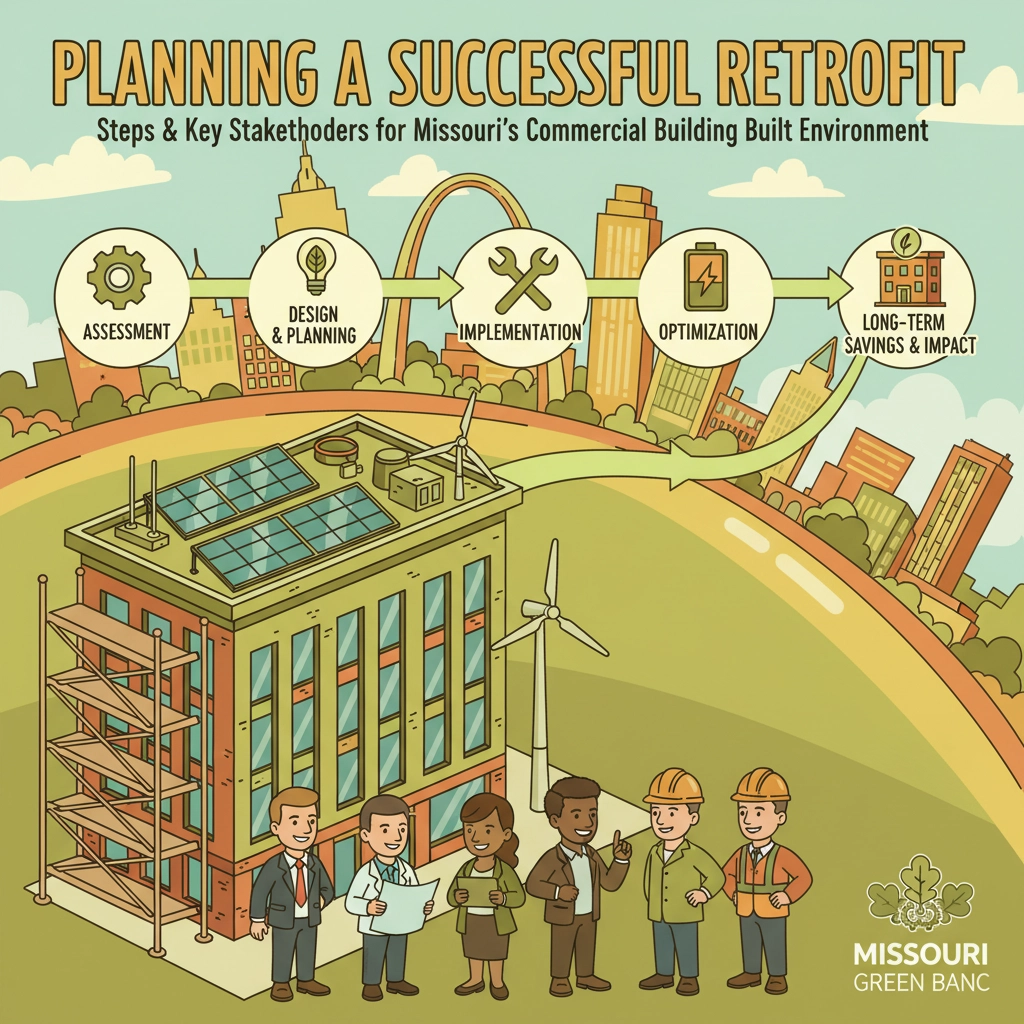
Commercial buildings across Missouri consume nearly a quarter of the state's total energy use, with over 44% of that energy dedicated to heating and cooling alone. For mayors, county commissioners, and city council members, this represents both a significant challenge and an unprecedented opportunity. When planned strategically, commercial building retrofits can transform local economies, reduce energy costs for businesses, and position communities as leaders in sustainability.
The key to success lies in understanding that retrofits are not simply construction projects: they are community development initiatives that require careful coordination among multiple stakeholders. Local government leaders play a crucial strategic role in facilitating these projects, connecting property owners with resources, and ensuring that retrofit efforts align with broader community goals.
Steps to Plan a Retrofit
1. Assess Through Professional Building Audits
Every successful retrofit begins with a comprehensive energy audit conducted by qualified professionals. An investment-grade energy audit serves as the diagnostic foundation, identifying inefficiencies that drive up utility costs and reduce building performance. These audits reveal common issues such as air leakage, inadequate insulation, and outdated mechanical systems that collectively impact a building's energy consumption.
For municipal leaders, encouraging building audits within commercial districts creates a roadmap for community-wide improvements. The audit process establishes baseline performance metrics and quantifies potential energy savings, providing property owners with the data needed to make informed investment decisions.
2. Set Clear Goals for Energy, Cost, and Sustainability
Successful retrofits require well-defined objectives that balance energy efficiency, cost-effectiveness, and sustainability outcomes. Property owners should establish specific targets for energy reduction, utility cost savings, and environmental impact. These goals might include achieving a 20-30% reduction in energy use, possibly even qualifying for LEED certification, or meeting specific carbon reduction targets.
Municipal leaders can support this goal-setting process by establishing community-wide energy efficiency targets and providing frameworks that help building owners align their projects with broader community sustainability initiatives. Clear goals also facilitate access to financing programs and grant opportunities that reward measurable performance improvements.

3. Engage Key Stakeholders Early and Often
Retrofit success depends on assembling the right team from the project's earliest stages. This collaborative approach ensures that all perspectives are considered and that potential challenges are identified before they become costly problems.
Essential stakeholders include property owners who drive project decisions, tenants whose operations may be affected, local officials who can facilitate permitting and policy support, utility companies that may offer rebates or technical assistance, energy consultants who provide specialized expertise, and finance partners who structure appropriate funding solutions.
Municipal leaders serve as crucial connectors in this process, helping to bridge relationships between private property owners and public resources while ensuring that retrofit projects support broader community development goals.
4. Develop Comprehensive Retrofit Plans with Diverse Financing Options
The planning phase transforms audit findings into actionable improvement strategies. Professional teams prioritize upgrades based on cost-effectiveness, energy savings potential, and operational impact. This systematic approach ensures that limited resources generate maximum returns.
Financing represents a critical component of retrofit planning. Missouri's PACE (Property Assessed Clean Energy) program, administered through the Missouri Clean Energy District (MCED), offers property owners the ability to finance 100% of retrofit costs with no upfront capital required. PACE financing is repaid through special assessments on property tax bills, spreading costs over 10-20 years while allowing immediate access to energy savings.
Additional financing options include utility rebate programs, federal and state grants, and traditional commercial lending. The most successful projects often combine multiple funding sources to optimize project economics and minimize property owner investment.
5. Create Realistic Timelines and Implementation Plans
Effective implementation requires detailed project scheduling that coordinates multiple work streams while minimizing disruption to building operations. Professional project managers develop timelines that account for permitting requirements, material procurement, contractor availability, and seasonal considerations.
Missouri's climate conditions make timing particularly important for envelope improvements and mechanical system upgrades. Planning major work during moderate weather seasons can reduce impact on building occupants while ensuring optimal installation conditions.
Municipal leaders can support implementation by streamlining permitting processes for energy efficiency projects and coordinating with contractors to minimize disruption to surrounding businesses and traffic patterns.
6. Monitor Results and Share Community Successes
Post-retrofit monitoring validates energy savings projections and identifies opportunities for additional improvements. Professional energy management systems can track performance in real-time, ensuring that upgraded systems operate as designed and that projected savings are realized.
Successful projects become powerful demonstration tools that encourage additional retrofits throughout the community. Municipal leaders can amplify these success stories through local media, business organizations, and community events, creating momentum for broader participation in energy efficiency initiatives.
Key Stakeholders and Their Roles
Municipal Leaders
Mayors, county commissioners, and city council members serve as policy facilitators, community connectors, and strategic visionaries. They establish supportive regulatory frameworks, connect property owners with resources, and ensure that retrofit activities align with comprehensive community development goals.
Property Owners and Developers
Building owners drive project decisions and provide necessary approvals for retrofit work. Developers bring specialized knowledge of construction processes and often serve as project managers coordinating multiple contractors and specialists.
Utilities and Energy Consultants
Utility companies offer rebate programs, technical assistance, and grid integration expertise. Independent energy consultants provide specialized knowledge of efficient technologies and help property owners navigate complex financing options.

Finance Partners and Contractors
Missouri Green Banc and MCED provide access to PACE financing and technical assistance programs. Construction contractors execute retrofit work, while specialized subcontractors handle specific systems such as HVAC, lighting, and building envelope improvements.
Community Advocates
Local business organizations, environmental groups, and community development organizations advocate for energy efficiency initiatives and help build public support for retrofit programs.
Local Benefits That Strengthen Communities
Economic Activity and Job Creation
Commercial retrofits generate significant local economic activity through construction employment, professional services, and ongoing maintenance needs. These projects typically utilize local contractors and suppliers, keeping investment dollars within the community while building regional expertise in energy efficiency technologies.
Enhanced Community Pride and Property Values
Visible improvements to commercial buildings enhance neighborhood aesthetics and demonstrate community commitment to sustainability. Energy-efficient buildings often command higher rental rates and property values, strengthening the local tax base.
Environmental Sustainability and Resilience
Reduced energy consumption directly decreases greenhouse gas emissions while improving air quality and environmental health. More efficient buildings also demonstrate greater resilience during extreme weather events, supporting community preparedness efforts.
Access to Technical Assistance and Funding
Communities that actively support energy efficiency initiatives gain access to specialized technical assistance and grant funding opportunities. MCED membership provides municipalities with professional resources, financing tools, and connections to statewide sustainability networks.
Taking Action: Your Path Forward
Municipal leaders ready to champion commercial building retrofits in their communities can take immediate action by connecting with the Missouri Clean Energy District. As Missouri's first and largest PACE program with over 300 municipal members, MCED provides comprehensive support including technical assistance, financing facilitation, and grant funding identification.
The retrofit transformation of Missouri's commercial building stock requires leadership that bridges private property interests with public community benefits. Municipal officials who understand the retrofit process and can effectively connect stakeholders become catalysts for widespread community improvement.
Commercial building retrofits represent one of the most effective strategies for simultaneously advancing economic development, environmental sustainability, and community resilience. The planning framework outlined here provides municipal leaders with the knowledge needed to support these transformative projects while building stronger, more sustainable communities across Missouri.
Ready to explore how your community can benefit from commercial building retrofits? Contact Missouri Green Banc to learn about MCED membership benefits and discover the financing solutions that can make energy efficiency accessible to every commercial property owner in your jurisdiction.
