
The Overlooked Majority
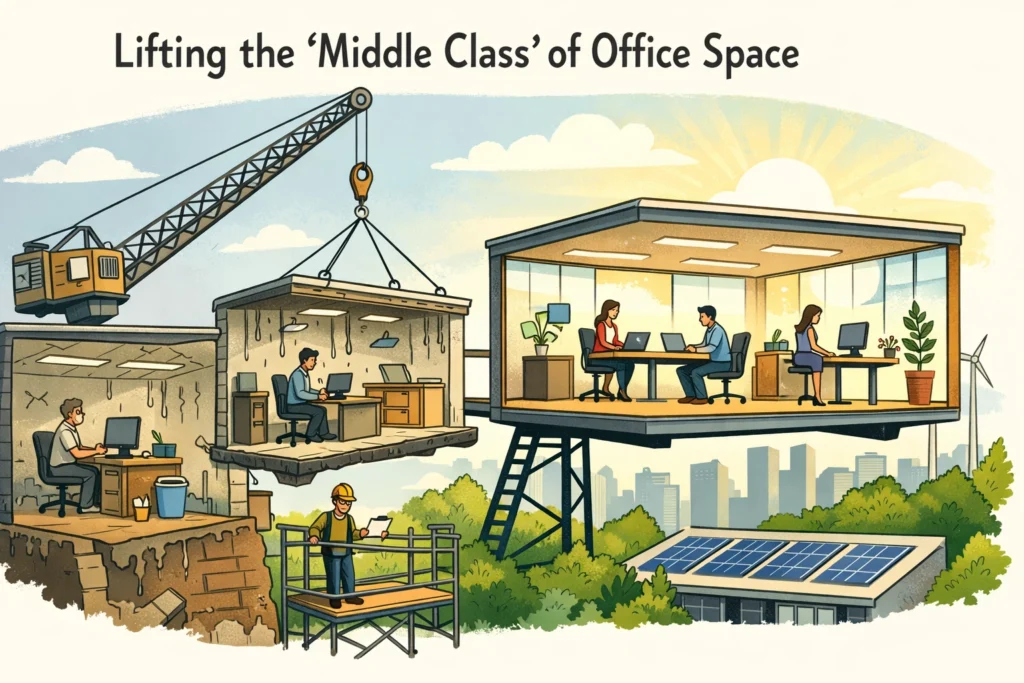
While everyone watches Class A towers compete for Fortune 500 tenants, Missouri's real estate landscape is quietly defined by a different kind of property: the solid, mid-tier office buildings that make up the bulk of commercial inventory across Kansas City, St. Louis, Springfield, and Columbia. These Class B and C properties: typically 10 to 30 years old, well-maintained but not flashy: are the "middle class" of office space. And right now, they're standing at a crossroads.
The conventional wisdom says these buildings are fine. They're functional. They have good bones. Tenants still lease space. But conventional wisdom isn't accounting for what's happening beneath the surface: rising energy costs, new tenant expectations around air quality and efficiency, and an accelerating shift in how commercial real estate is valued. The buildings that seemed comfortably positioned just five years ago now face a real risk of becoming what the industry calls "stranded assets": properties that can't compete, can't command rents, and can't justify capital investment.
The good news? This isn't inevitable. Class B and C buildings represent one of the largest untapped opportunities for building decarbonization and energy efficiency improvements in Missouri. With the right financing tools: specifically, Missouri Green Banc's Commercial Property Assessed Clean Energy (CPACE) financing and the statewide reach of the Missouri Clean Energy District: these properties can be lifted up, not left behind.

What Defines the Middle Class
Class B buildings typically sit in solid secondary locations, often just outside central business districts. They feature functional HVAC systems, reliable elevators, and adequate parking. Finishes are professional but not premium. Building systems work: they're just not cutting-edge. Most were built or last renovated between 2000 and 2015.
Class C properties occupy an even more value-conscious tier. They may be 20 to 40 years old, with older mechanical systems and dated interiors. Locations tend to be further from downtown cores. Rents are affordable, which makes them attractive to smaller businesses, nonprofits, and professional services firms that don't need (or can't afford) Class A pricing.
Together, these properties house a disproportionate share of Missouri's local employers: regional law firms, accounting practices, insurance agencies, nonprofit headquarters, and mid-sized businesses that form the backbone of local economies. They're not glamorous, but they're essential.
The Stranded Asset Risk Is Real
Here's the uncomfortable truth: Class B and C buildings are the most vulnerable segment of Missouri's commercial real estate market. They face pressure from multiple directions:
Energy cost exposure. Older HVAC systems, single-pane windows, and insufficient insulation mean these buildings burn more energy per square foot than newer or recently renovated competitors. As utility rates rise: and they will: operating costs climb, squeezing already tight margins.
Tenant expectations. Post-2020, commercial tenants care about indoor air quality, daylighting, thermal comfort, and sustainability credentials. Class A buildings are responding. Class B and C properties that don't upgrade risk losing tenants to competitors who do.
Capital access challenges. Traditional lenders prefer financing new construction or trophy properties. Mid-tier buildings often struggle to secure affordable capital for energy retrofits or building system upgrades, even when those improvements would deliver measurable returns.
Regulatory trends. Building performance standards and energy benchmarking requirements are expanding. Properties that can't demonstrate efficiency improvements will face compliance costs: or worse, penalties and restrictions on leasing.
The result? A widening gap between properties that can afford to invest in energy efficiency and those that can't. Buildings in the middle get stuck.
Why This Matters for Missouri
This isn't just a real estate problem. It's an economic stability issue.
Class B and C office buildings generate significant property tax revenue for Missouri municipalities. They provide affordable workspace for the small and mid-sized businesses that employ local residents. When these properties lose competitiveness, communities lose tax base, employers struggle to attract talent, and local economies weaken.
Retrofitting these buildings isn't charity. It's economic self-preservation. Energy efficiency improvements lower operating costs, increase net operating income, and extend the useful life of the asset. Better buildings attract better tenants. Stable occupancy supports stable local economies.
And here's the part that gets overlooked: retrofitting Class B and C properties keeps embodied carbon locked in place. Demolishing and replacing these buildings wastes the energy and materials already invested in their construction. Upgrading them is both the economically rational and environmentally responsible choice.
The Retrofit Opportunity
The path forward isn't mysterious. Class B and C buildings need targeted, cost-effective energy retrofits:
- HVAC system upgrades. Replace aging rooftop units with high-efficiency variable refrigerant flow (VRF) or packaged systems. Add smart controls and zoning to reduce waste.
- Lighting modernization. Transition to LED fixtures with occupancy sensors and daylight harvesting controls.
- Building envelope improvements. Upgrade windows, add insulation, and seal air leaks to reduce heating and cooling loads.
- Renewable energy integration. Install solar arrays on rooftops or carports to offset electricity costs and hedge against future rate increases.
- Water efficiency measures. Low-flow fixtures and water management systems reduce both consumption and utility bills.
These aren't exotic interventions. They're proven, bankable upgrades with predictable payback periods. The challenge isn't technical: it's financial.

How Missouri PACE Program Financing Changes the Game
This is where Missouri Green Banc and the Missouri Clean Energy District enter the picture.
Commercial Property Assessed Clean Energy (CPACE) financing solves the capital access problem that has kept Class B and C buildings stuck. Here's how it works:
CPACE loans are repaid through a voluntary assessment on the property tax bill, which means the financing stays with the building, not the owner. If the property sells, the CPACE obligation transfers to the new owner along with the energy savings. This structure makes CPACE especially attractive for mid-tier properties because:
- No upfront capital required. Building owners can finance 100% of eligible project costs, preserving cash for operations or other investments.
- Long-term, fixed-rate financing. CPACE terms can extend up to 25 years, which allows monthly savings to exceed monthly assessment costs from day one.
- Non-recourse to the borrower. The assessment runs with the property, not the property owner personally, which makes underwriting more flexible than traditional commercial loans.
- Preserves existing debt. CPACE doesn't interfere with mortgages or other senior financing, and many lenders now actively support CPACE as a tool to protect and enhance asset value.
Missouri Green Banc, operating in partnership with the Missouri Clean Energy District, has built the state's first and largest PACE program, serving over 300 municipal members across Missouri. This statewide reach means property owners in Jefferson City, Joplin, Cape Girardeau, and beyond can access the same energy efficiency financing tools as their counterparts in major metros.
Competitive Advantage, Not Charity
Retrofitting a Class B or C building isn't about "going green" for its own sake. It's about staying competitive.
A mid-tier office building with updated mechanical systems, efficient lighting, and lower utility bills can compete directly with Class A properties on operating cost: and beat them on rent. That's a compelling pitch for cost-conscious tenants who want professional space without premium pricing.
Energy retrofits also reduce deferred maintenance risk. Replacing a 20-year-old HVAC system before it fails avoids emergency capital calls and tenant disruptions. Upgrading building systems now locks in efficiency gains for the next 15 to 20 years.
And in an increasingly carbon-conscious market, properties that can demonstrate measurable energy performance improvements gain an edge with corporate tenants tracking Scope 3 emissions and institutional investors applying ESG screens.
This isn't aspirational. It's practical risk management and competitive positioning.

Blended Capital for Complex Projects
For properties with more significant challenges: buildings that need both energy upgrades and structural improvements, or projects in underserved markets where traditional financing is scarce: Missouri Green Banc offers blended capital solutions that combine CPACE with grant funding, tax credit equity, or other public incentives.
This approach is particularly valuable for mission-critical community assets: nonprofit headquarters, community health centers, and municipal facilities that provide essential services but operate on tight budgets. Blended financing structures allow these buildings to achieve deep energy savings without compromising program delivery or financial stability.
The Path Forward
Missouri's Class B and C office buildings don't need to become stranded assets. They need capital, technical support, and financing structures designed for their specific circumstances.
Missouri Green Banc exists to provide exactly that. Through CPACE financing, blended capital solutions, and partnerships with the Missouri Clean Energy District's 300+ member municipalities, MGB makes energy efficiency upgrades accessible and affordable for the properties that need them most.
Building owners and municipal partners across Missouri can access these tools today. The application process is straightforward, and MGB's team works directly with property owners, engineers, and contractors to structure financing that aligns with project economics and cash flow.
The middle class of Missouri's office space doesn't need rescuing. It needs lifting. And the capital to do that is available now.
Ready to explore CPACE financing for your property? Visit Missouri Green Banc to learn more about energy retrofit financing options, or connect directly with the team at missourigreenbanc.org/contact.
This post is part of "The Retrofit Revolution" series, exploring how Missouri's existing building stock can be upgraded, protected, and positioned for long-term success through strategic energy efficiency investments and inclusive financing.