
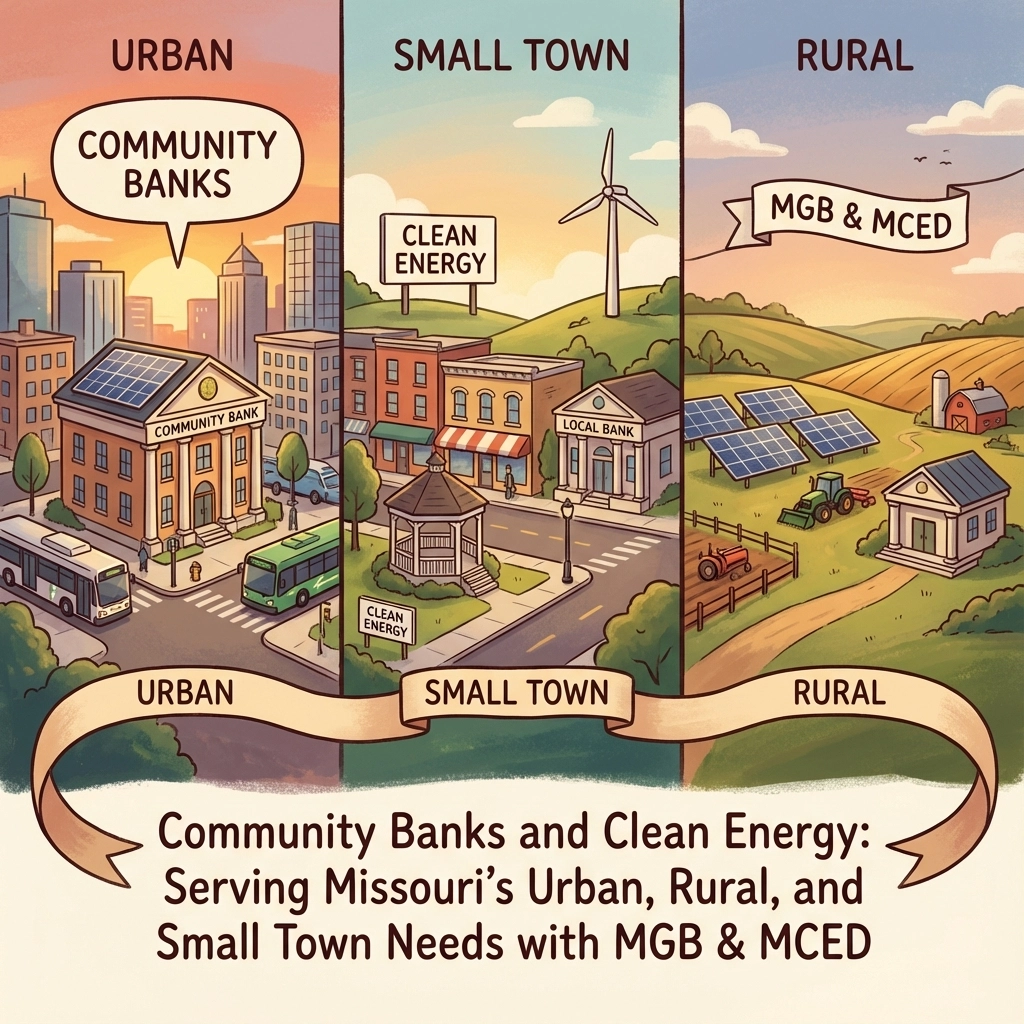
Community banks across Missouri are discovering a powerful competitive advantage: partnering with Missouri Green Banc and the Missouri Clean Energy District to serve their local markets with innovative clean energy financing solutions. While larger banks focus on standardized products, community banks partnered with Missouri's PACE program can offer tailored financing that directly addresses the unique energy challenges facing urban centers, rural communities, and small towns throughout the state.
The Missouri Clean Energy District operates Missouri's first and largest PACE program with over 300 municipal members, creating an unprecedented opportunity for community banks to lead in Property Assessed Clean Energy Missouri financing while strengthening their local market position.
Urban Markets: Scaling Impact Through Strategic Partnerships
In Missouri's urban centers like Kansas City and St. Louis, community banks face intense competition from national lenders and fintech companies. However, the partnership with Missouri Green Banc creates distinct advantages in the growing commercial PACE loans Missouri market.
Urban properties often present complex energy efficiency opportunities: from aging office buildings needing comprehensive HVAC upgrades to manufacturing facilities seeking renewable energy installations. These projects typically range from $100,000 to several million dollars, representing substantial lending opportunities for community banks with the right expertise and risk management tools.

The recent St. Louis municipal investment demonstrates how urban partnerships create project pipelines. When Missouri Green Banc secured Phase 1 planning funding with the City of St. Louis, it established frameworks that generate finance-ready projects worth an estimated $2 million in follow-on capital opportunities. Community banks positioned as preferred lenders in these municipal partnerships gain access to vetted projects with strong credit profiles.
Urban markets also benefit from the concentration of energy service companies, contractors, and property management firms that understand CPACE financing advantages. This ecosystem creates natural referral networks for community banks, enabling them to build sustainable origination channels without expensive marketing campaigns.
Rural Communities: Addressing Historic Financing Gaps
Rural Missouri presents unique opportunities for community banks willing to embrace energy improvement loans. Agricultural operations, small manufacturers, and rural healthcare facilities often struggle to access specialized financing for energy upgrades through traditional channels.
The Porter Farms C-PACE deal exemplifies how community banks can profitably serve rural markets. This first-of-its-kind transaction demonstrated that Missouri PACE program financing works effectively for agricultural operations, creating a replicable model for similar projects across Missouri's farming communities.
Rural projects typically range from $25,000 to $500,000: perfectly sized for community banks seeking portfolio loans that strengthen customer relationships. Energy efficiency financing Missouri for rural properties often includes LED lighting upgrades, HVAC system replacements, and solar installations that generate immediate cost savings while improving operational efficiency.

The partnership with Missouri Green Banc provides crucial support for rural lending. Standardized documentation, technical assistance, and credit enhancements make smaller projects economically viable while reducing administrative burden on bank staff. This shared infrastructure enables community banks to serve rural markets that larger institutions typically overlook due to transaction size and complexity considerations.
Missouri's agricultural sector faces increasing pressure from energy costs, making building decarbonization initiatives particularly attractive to farmers and agribusiness operations. Community banks that establish expertise in this sector position themselves as essential financial partners for long-term customer relationships.
Suburban and Small Town Markets: The Sweet Spot for Community Banks
Suburban and small-town markets represent the ideal intersection of project size, customer relationships, and local market knowledge that community banks excel at serving. These markets typically feature mid-sized commercial properties, community buildings, school districts, and established small businesses seeking renewable energy funding.
Small towns across Missouri are increasingly interested in energy independence and cost reduction strategies. Municipal buildings, fire stations, libraries, and community centers present excellent opportunities for public-private partnerships clean energy projects. When community banks can offer competitive financing for these projects, they strengthen relationships with key local stakeholders while building visible success stories in their service areas.
The membership benefits of Missouri Clean Energy District participation become particularly valuable in smaller markets. Access to standardized contracts, regulatory compliance support, and technical resources enables community banks to compete effectively without developing extensive internal expertise. This levels the playing field with larger institutions while maintaining the local relationships and community knowledge that distinguish community banking.
Partnership Structure: How Missouri Green Banc Enhances Community Bank Capabilities
The Missouri Green Banc partnership operates as a force multiplier for community bank capabilities rather than a replacement for traditional lending expertise. Missouri Green Banc functions as a specialized clean energy division, providing technical knowledge, risk management tools, and market development support that would be prohibitively expensive for individual banks to develop internally.

Key partnership benefits include:
Credit Enhancement Tools: Loan loss reserves and interest rate subsidies reduce risk for participating banks while maintaining attractive returns on clean energy incentive projects.
Standardized Documentation: Pre-approved contracts, environmental assessments, and regulatory compliance frameworks eliminate barriers to entry for banks new to sustainable building financing Missouri.
Technical Expertise: Energy audit validation, project oversight, and performance monitoring ensure loan quality while building internal bank expertise over time.
Market Development: Relationships with contractors, energy service companies, and property owners create qualified borrower pipelines specifically interested in working with participating banks.
Regulatory Support: Navigation of PACE energy upgrade regulations, municipal ordinances, and tax credit implications provides confidence for banks and borrowers.
Actionable Steps for Community Banks
Community banks interested in clean energy leadership can begin with straightforward steps that build expertise while generating immediate results:
Start with Assessment: Evaluate current commercial loan portfolios to identify customers who might benefit from energy efficiency improvements. Manufacturing companies, retail chains, and property management firms often present immediate opportunities.
Join Missouri Clean Energy District: Membership provides access to training, marketing materials, and technical support while demonstrating commitment to community clean energy projects Missouri.
Develop Internal Champions: Designate specific loan officers to develop clean energy expertise and serve as internal resources for PACE program education.
Build Contractor Networks: Establish relationships with local energy service companies and contractors who can identify potential projects and refer qualified borrowers.
Market Strategically: Highlight PACE financing capabilities in existing customer communications, emphasizing local expertise and competitive advantage over national lenders.
Success Stories Drive Market Development
Early adopters of Missouri PACE program financing report significant competitive advantages in customer retention and new business development. When one community bank successfully finances its first major energy project, the visible results create marketing opportunities that generate additional borrower interest.
The predictability of energy savings appeals to community bank risk management requirements. Unlike many commercial investments, energy improvements generate measurable, verifiable returns through utility bill analysis. This enables banks to underwrite loans with greater confidence while building portfolios of loans backed by tangible performance metrics.

Community banks also benefit from positive community relations associated with environmental leadership. Energy efficiency projects often generate local employment, reduce business operating costs, and demonstrate commitment to community sustainability: outcomes that strengthen bank reputation and customer loyalty.
Conclusion: Leading the Energy Transition
Community banks partnering with Missouri Green Banc and Missouri Clean Energy District are positioned to lead Missouri's clean energy transition while building sustainable competitive advantages in their local markets. The combination of local relationships, technical support, and innovative financing structures creates opportunities to serve customers in ways that larger institutions cannot replicate.
The Missouri PACE program represents more than a financing product: it represents a strategic positioning opportunity for community banks committed to long-term customer relationships and community development. Banks that embrace this opportunity now establish market leadership positions that will become increasingly valuable as energy costs rise and sustainability considerations drive more business investment decisions.
For community banks ready to explore these opportunities, Missouri Green Banc offers the expertise, support, and partnership structure needed to succeed in clean energy financing while maintaining focus on the local relationships and community knowledge that define successful community banking.
